


Injection Moulding Surface Finishes
From textured to highly cosmetic, there are a number of surface finish options for moulded parts
Injection‑moulded parts are everywhere—from highly cosmetic housings hiding in plain sight to internal components where a fine polish is unnecessary. Most people pay no attention to the surface finish on those parts. But for product designers and engineers, it is an important design consideration. Identifying the right surface finish is dependent on a few important elements, namely the development or production stage that your parts are in, the materials they are being manufactured in, and their end‑use application.
Surface Finishes for Thermoplastics
Injection moulding offers hundreds of thermoplastic resins that are flexible, strong, and can have fine cosmetic finishes. At Konlida, aluminium moulds can be quickly produced by three‑axis milling and easily hand polished or textured to one of eight surface finishes, which range from non‑cosmetic to high‑gloss polish.
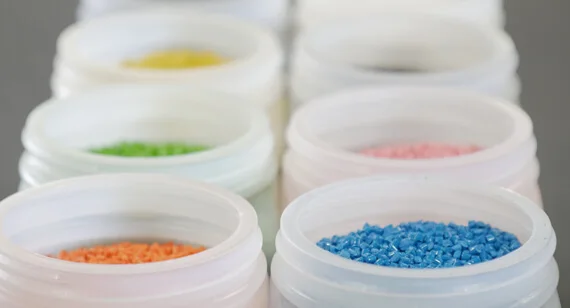
Material colour and hardness significantly affects the visual aesthetics of finished moulded parts. For example:
- Harder materials pick up textures more than softer ones. Polycarbonate shows the difference between an F1 surface finish and a B1 more than on a part made of TPV.
- Darker colours show textures more than lighter colours, regardless of part hardness.
- Fillers impact the overall appearance of texture. A non‑filled nylon part will pick up finishes more than a 30% glass‑filled nylon part, for example.
Table: Surface Finish Options for Thermoplastics
| Surface Finish Specification | Description |
|---|---|
| PM‑F0 | Non‑cosmetic, finish to Konlida discretion |
| PM‑F2 | Non‑cosmetic, EDM permissible |
| PM‑F1 | Low‑cosmetic, most toolmarks removed |
| SPI‑C1 | 600 grit stone |
| SPI‑B1 | 600 grit paper |
| SPI‑A2 | Grade #2 Diamond Buff |
| PM‑T1 | Light bead blast |
| PM‑T2 | Medium bead blast |
All polish and texture is applied directly to the mould itself and transferred to the parts during the injection moulding process. For this reason, secondary finishing is not available, which makes material selection critical in some cases. Typically, the link between the surface finish and material is small, but glass, mineral, or soft and high‑shrink materials can produce parts that do not always reflect what you may be looking for in a finish.
To understand how finish selection interacts with other design considerations such as wall thickness and draft, see our Wall Thickness Guidelines and Draft Angle Guidelines .
Glass‑ and mineral‑filled materials provide unique material properties that unfilled materials do not, but be cautious when using them if they are intended to be a highly cosmetic part. Glass and minerals can create material streaking and the polish can even be difficult to distinguish between grades. This is not the case with all filled resins, but we suggest speaking with our applications engineering team or requesting a material sample plaque of the actual material you intend to use.
At Konlida, you will receive a fully interactive quote with design for manufacturability (DFM) feedback that highlights problematic areas where increased attention should be paid—a textured surface may have more draft requirements than a polished surface would, for instance.

Draft requirements for textured finishes:
- A minimum of 3° draft is required for a PM‑T1 finish
- A minimum of 5° draft is required for a PM‑T2 finish
Additionally, finishes on deep and thin ribs may not be possible on parts as they are challenging to reach within the mould. For comprehensive guidance on applying draft correctly, refer to our Draft Angle Guidelines . For avoiding common surface defects, see Cosmetic Defects in Injection Moulding .
In addition to the eight available surface finishes at Konlida, you can also obtain a custom finish. With a custom finish, you still have to choose from the seven options, but different finishes can be applied to the A and B sides of the mould. Note that the A side of the mould typically represents the outside of the part and the B side is often the one with the most retention and ejector pins.
We can easily add a custom finish as long as you follow these simple rules:
- Provide a clearly marked, colour‑coded image (JPG or PDF) of your part indicating the finishes required.
- The part has clearly defined surfaces with a minimum of 0.38 mm of feature height definition, so we can mask off areas for polish or texturing.
- A CAD model is provided with the aforementioned required draft angles for the chosen textures.
Gating and part ejection on clear or cosmetic parts is another consideration to keep in mind. If you have a clear lens, or if the side with the most retention is actually the cosmetic side of the part, you may want to have a discussion with our applications engineering team. Ejector pins vary in size, location, and quantity, but are often a necessity for extracting a part from the mould. Some materials may lend themselves to be extracted manually. Another alternative is to use an ejector plate that covers more surface area and can be added, depending on part geometry.
For more on gate design, placement, and their impact on part appearance, see our 3 Gate Considerations to Improve Mouldability guide.
Surface Finish Options for Silicone Rubber Parts
Liquid silicone rubber (LSR) moulding is a thermoset process using the same manufacturing methods for producing a mould as earlier discussed, but the moulding process itself is different. LSR moulding uses two liquids mixed together, which are then heat cured in the mould to produce a final part.
Surface finish options for LSR are more limited than for plastics. LSR offers the following finishes:
| Surface Finish Specification | Description |
|---|---|
| PM‑F0 | Non‑cosmetic, finish to Konlida discretion |
| PM‑F1 | Low‑cosmetic, most toolmarks removed |
| SPI‑C1 | 600 grit stone |
| PM‑T1 | SPI‑C1 + light bead blast |
| PM‑T2 | SPI‑C1 + medium bead blast |
| SPI‑A2 | Grade #2 Diamond Buff |
For more on LSR material properties and design considerations, see our Materials Comparison Guide and LSR Moulding services .
And like plastics, a custom option that may include two or more of the available finishes is also possible. Unlike plastics, however, LSR is much more forgiving as no ejectors are required for the removal of the parts. All LSR parts are manually pulled from the mould, so you do not need to consider ejection or retention using this process. Another bonus is gating—LSR has extremely shallow gates that are nearly undetectable after moulding.