

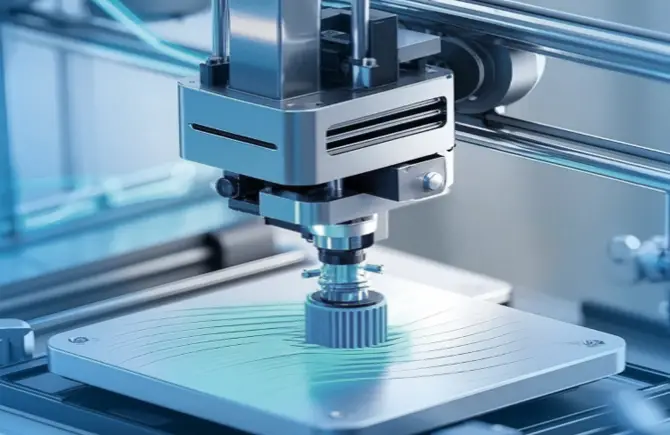

Medical imaging technologies such as CT and MRI scans provide detail, but reviewing anatomy on a flat screen still has limitations. Surgeons often need a more intuitive way to understand complex anatomy before entering the operating room or developing a device. 3D printing is becoming an increasingly practical tool for creating patient‑specific anatomical models quickly and accurately.
For engineers and product developers working in healthcare, this shift also creates new opportunities for faster prototyping, surgical planning support, and device testing using real‑world anatomical geometry.
At Konlida, our 3D printing services support a range of additive technologies—including SLA, SLS, MJF, and PolyJet—for medical and healthcare applications.
What Are 3D-Printed Anatomical Models?
3D-printed anatomical models are physical representations of patient anatomy created from medical imaging data such as CT or MRI scans. Specialised software converts imaging files into printable 3D geometry, which is then manufactured using additive manufacturing technologies including stereolithography (SLA) , selective laser sintering (SLS) , Multi Jet Fusion (MJF) , and PolyJet printing.
Unlike generic anatomical references, these models can replicate patient‑specific structures with a high degree of accuracy. Depending on the application, models may represent bone, vascular systems, organs, or soft tissue structures.
Medical teams use these models across a range of applications, including:
- Preoperative planning
- Surgical simulation
- Medical education
- Patient communication
- Medical device development and validation
The ability to rapidly produce complex geometries without tooling makes additive manufacturing particularly valuable for one‑off or highly customised medical applications.
For healthcare innovators developing new products, our medical industry solutions combine 3D printing with CNC machining and injection moulding to support the entire product development lifecycle—from prototyping to production.
Why Physical Anatomical Models Matter
Even with advanced imaging software, interpreting complex anatomy in two dimensions can be difficult, particularly in cases involving congenital abnormalities, tumours, or intricate vascular structures. Physical models improve spatial understanding in ways digital visualisation alone cannot always provide.
Better Surgical Preparation
Surgeons can use anatomical models to evaluate access points, rehearse procedures, and anticipate challenges before entering the operating room. This is especially valuable for specialties such as neurosurgery or craniofacial reconstruction. Holding a patient‑specific model allows surgical teams to study anatomy from multiple angles and collaborate more effectively during procedural planning.
Improved Communication Across Teams
Anatomical models also improve communication between surgeons, engineers, device manufacturers, and patients. Product development teams can evaluate device fit against real anatomical geometry earlier in development cycles, reducing iteration time and identifying potential issues before clinical use.
For patients, physical models can simplify complex medical discussions and support informed consent conversations.
Medical Device Development
Medical device manufacturers increasingly use anatomical models during product development and testing to evaluate:
- Device fit and ergonomics
- Catheter pathways
- Implant positioning
- Surgical tool accessibility
- Overall procedural workflows
This helps teams identify potential design issues earlier while reducing reliance on cadaveric studies during early‑stage development.
For device manufacturers working with complex geometries, our rapid prototyping guide offers insights into accelerating development cycles.
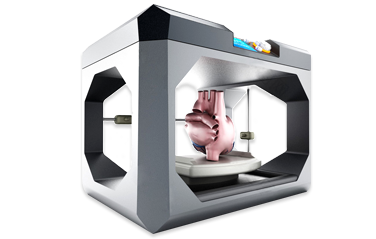
Common 3D Printing Technologies for Anatomical Models
Different additive manufacturing technologies support different levels of detail, surface finish, material properties, and production speed. Selecting the right process depends on the intended clinical or engineering application.
| Technology | Typical Advantages | Common Applications |
|---|---|---|
| SLA | High resolution and smooth surfaces | Surgical planning tools |
| PolyJet | Multi‑material and colour capability | Soft tissue simulation |
| SLS | Durable nylon parts | Functional handling models |
| MJF | Fast production and strong parts | Engineering validation models |
SLA for Fine Anatomical Detail
SLA printing is commonly used for anatomical models because it produces smooth surfaces and excellent feature resolution. Fine structures such as vasculature and bone geometry can be reproduced with a high degree of precision.
For more on SLA capabilities, see our SLA 3D printing guide .
PolyJet for Multi-Material Simulation
PolyJet technology supports multiple material hardnesses and colours within a single print, making it useful for models that need to differentiate anatomical structures or simulate varying tissue characteristics.
SLS and MJF for Functional Evaluation
For engineers testing devices against anatomical geometry, nylon‑based technologies such as SLS and MJF offer durability and dimensional stability. These processes are often well suited for repeated handling and fit testing.
For a deeper comparison of these technologies, see our MJF vs. FDM 3D printing guide and resin 3D printing guide .

Design Considerations for 3D-Printed Anatomical Models
Creating effective anatomical models requires more than converting scan data into a printable file. Design teams must consider imaging quality, material selection, manufacturing technology, and end‑use requirements throughout the development process.
Imaging Quality and Segmentation
Model accuracy starts with imaging data. Low‑resolution scans or poor segmentation can affect dimensional accuracy and reduce the model’s clinical value. Engineers and medical teams must carefully process DICOM data to ensure anatomical structures are captured correctly before manufacturing begins.
Material Selection and Functional Requirements
When models require multiple colours, transparency, or varying material properties to distinguish anatomical structures, consider technologies capable of multi‑material printing for more advanced visualisation and simulation.
Material selection depends heavily on the model’s intended use. Transparent resins may help visualise internal structures, while flexible materials can better simulate soft tissue behaviour. Rigid materials are often preferred for representing bone anatomy or supporting implant evaluation.
For guidance on material selection, see our materials comparison guide . For applications requiring high‑performance materials, our PEEK and PEI guide provides additional insight.
Accuracy and Repeatability
Healthcare applications demand consistent manufacturing quality and repeatability. Production teams must maintain tight tolerances and reliable process control, particularly when anatomical models are used for surgical planning or device validation.
For more on quality management in medical manufacturing, see our ISO certifications and quality standards and why your parts supplier should be ISO 9001 certified .
Towards Specialised Healthcare Solutions
As additive manufacturing technologies continue evolving, anatomical modelling will likely become an increasingly important part of modern healthcare workflows. Organisations that can rapidly prototype, test, and iterate using patient‑specific models will be better positioned to support faster innovation and more personalised care.
For more on how digital manufacturing is transforming healthcare, see our 3D printing in medical implants guide and aerospace and medical risk mitigation guide —which shares similar principles of precision and reliability across highly regulated industries.
Summary
| Technology | Best For | Key Advantage |
|---|---|---|
| SLA | Fine detail, smooth surfaces | High resolution for complex anatomy |
| PolyJet | Multi‑material, colour, soft tissue | Versatile material properties |
| SLS | Durable, functional models | Strength and dimensional stability |
| MJF | Fast production, engineering validation | Speed and consistency |
Ready to Explore 3D Printing for Medical Applications?
Konlida’s 3D printing services support a wide range of medical and healthcare applications—from anatomical models to surgical guides and device prototypes.