


3D printing is making major inroads into customising medical implants. It allows implant manufacturers – and sometimes even hospitals – to create complex geometries and patient‑specific solutions that save surgeons time and improve patient outcomes.
Largely used for orthopaedic surgery, 3D printing is starting to break into other areas such as heart surgery and even replacement retinas in eyes. With research into bio‑printing, there is even the chance that the future could bring a 3D‑printed heart. What was once science fiction is rapidly becoming science fact.
Just like industrial 3D printing, the process starts with digital data – in this case a computerised tomography (CT) scan. This imaging technique uses X‑ray measurements taken from many different angles to produce an image of the body. It is hailed as a way to see inside the body without surgery. The surgical team then uses this information to plan and produce custom‑designed implants using 3D printing, often – but not exclusively – using titanium or stainless steel.
🔗 内链:DMLS Metal 3D Printing → /services/3d-printing/direct-metal-laser-sintering/ (green – strong)
AI and Generative Design Assist Implant Innovation
Artificial intelligence and generative design tools are helping manufacturers create medical implants that are lighter, stronger, and more precisely tailored to patient anatomy. By analysing performance requirements and anatomical data, AI‑enabled software can generate optimised implant geometries that would be difficult or impossible to produce with traditional manufacturing methods.
Combined with additive manufacturing, these technologies are helping accelerate design iteration, improve fit and function, and reduce time‑to‑production for patient‑specific devices.
🔗 内链:Design for Manufacturing Toolkit → /resources/design-for-machining-toolkit/ (green – strong)
Personalised Healthcare for Better Outcomes
At present, most applications involve musculoskeletal injuries. The human body has 206 bones – all of which support our body or protect vital organs – so when they are damaged, this can severely affect a patient's health and quality of life.
Using traditional methods, creating an implant for a patient requires multiple medical appointments. At a time when a damaged bone could be causing the patient pain, reducing mobility and affecting lifestyle, this long wait for an implant can be incredibly uncomfortable.
It also means that the implant is not ideal, as it is not tailored to their body. For the skull, it could even mean that the patient is fitted with a mesh implant, which can be weak and lack precision.
This places the surgeon in a difficult position, since they often need to not only operate on the patient but also spend time adapting and reshaping the implant to make it fit better.
Fortunately, using digital imaging technology to produce customised 3D‑printed implants is making this process far faster for the surgeon – and the result better and more comfortable for the patient. It also means that hospitals can reduce their inventory of expensive implants on site.
🔗 :Medical Industry Solutions
Advanced Lattice Structures Improve Osseointegration
One of the biggest advantages of additive manufacturing is the ability to produce complex lattice structures that support bone ingrowth and long‑term implant stability. Porous geometries can help reduce implant weight while improving osseointegration by mimicking the structure of natural bone.
These advanced internal structures are increasingly being used in orthopaedic, spinal, and cranial implants where strength, biocompatibility, and patient outcomes are critical.
🔗 :Materials Comparison Guide
Additive Manufacturing Continues to Expand Across Medical Specialties
While early applications focused primarily on prototyping and highly customised cases, 3D printing is now being used across a growing range of medical implant applications. Orthopaedic implants, spinal cages, dental implants, and cranial/maxillofacial devices are among the fastest‑growing areas of adoption.
As material capabilities and manufacturing consistency improve, additive manufacturing is becoming an increasingly viable option for both patient‑specific and low‑volume production applications.
Applications for 3D Printed Medical Implants
Common examples of 3D‑printed implants include:
Spinal implants
Shoulder joints
Hip implants
Facial surgery
Dental implants
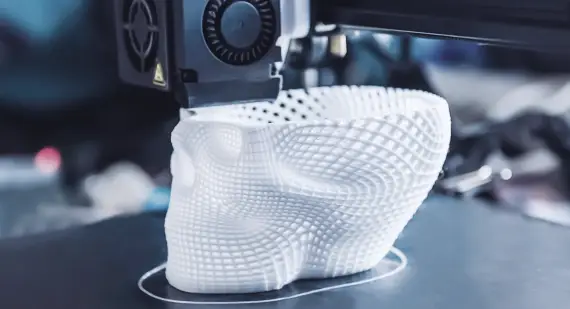
Skull and facial implants are good examples that require highly customised solutions. In the Netherlands, for example, doctors replaced the whole top of a 22‑year‑old woman's skull with a 3D‑printed implant instead of a traditional option. In studies, doctors found that 3D‑printed skull implants were cosmetically superior, and patients often had better brain functions as a result.
🔗 :Aerospace & Medical Material Capabilities
3D‑Printed Implants for Heart Surgery
Recently, we have seen examples of implants for parts originally made from organic tissue. A good example is a heart valve prosthesis made from silicone AM. Created by a team of researchers from ETH Zurich, these artificial 3D‑printed heart valves make it possible to replace valves in an ageing population. Early results are promising, although such a solution is probably still a decade away.
Beyond this, 3D printing technology offers new ways of working with other implant materials. This includes research in Australia for 3D‑printing stents using nitinol – a metal alloy of nickel and titanium that will resume its intended shape after deformation. While surgeons are already using this material for arterial stents, 3D printing will enable more sizes and configurations to better suit patients' needs.
New Materials Are Expanding Design Possibilities
Advancements in materials science are continuing to expand the possibilities for medical additive manufacturing and 3D‑printed medical implants. While titanium and stainless steel remain widely used for orthopaedic implants due to their strength, corrosion resistance, and biocompatibility, manufacturers are also making progress with high‑performance plastics such as PEEK, along with advanced polymers, ceramics, and bioactive materials for specialised medical applications.
These evolving material options allow engineers to better balance mechanical performance, patient comfort, imaging compatibility, and biological integration requirements.
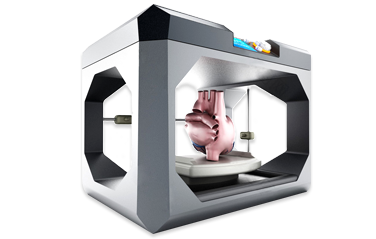
PEEK in particular is expanding opportunities for additive manufacturing to move beyond traditional medical device production environments and into hospitals and clinical labs, where patient‑specific implants could potentially be:
Scanned
Designed
Reviewed in a virtual 3D environment
Produced on site
Surgically implanted within just a few days
Because these custom implants are designed around the patient's individual anatomy, they can also help improve fit while reducing surgical time. Meanwhile, ongoing research continues to push the boundaries of customisation and performance for next‑generation medical manufacturing applications.
🔗 内链:PEEK & PEI High-Performance Plastics → /services/cnc-machining-service/plastics/peek/ (green – strong)
🔗 :Injection Moulding Services
Regulatory Considerations Remain Critical
Medical implant manufacturers must navigate strict regulatory and quality requirements when developing additive manufacturing workflows. Factors such as material traceability, repeatability, validation, and post‑processing controls all play a critical role in ensuring device safety and performance.
As the industry matures, manufacturers are increasingly investing in robust quality management systems and standardised processes to support long‑term production readiness.
🔗 :Quality Certifications
🔗 :ISO 13485 Medical Device Quality
The Future of 3D Printed Medical Implants
Clearly, the idea of tailoring implants to a patient using 3D printing opens up numerous opportunities for more personalised healthcare. While many of these advances could be a few years off yet, the possibilities are almost limitless. Other examples of research include:
The production of artificial retinas for eye surgery
The potential of printing skin grafts
Even a new heart
While the latter two examples may not be available in the near future, they offer a glimpse of what is possible using this remarkable technology. Even more than in other industries, it appears that the only limitation of 3D printing in medicine is our imagination.
Important note: Implantable medical applications require careful evaluation of design, material, manufacturing process, validation, sterilisation, biocompatibility, and regulatory requirements. We recommend evaluating any implantable use case within applicable regulatory frameworks (e.g., EU MDR, FDA, ISO 13485).
Summary
Key Area
Impact
Personalisation
Patient‑specific implants improve fit, comfort, and surgical outcomes
Materials
Titanium, PEEK, nitinol, and ceramics enable diverse applications
Technology
AI + generative design + 3D printing accelerate development
Regulation
ISO 13485 and rigorous validation are essential for market approval
Future
Bio‑printing and smart materials may revolutionise healthcare