


Jigs or fixtures? The two terms are easy to confuse. You will often find them paired together and despite sharing similar functions, the two are not interchangeable. Let’s learn the subtle differences between these manufacturing tools by examining how they are used to improve manufacturing quality, reduce production costs, and automate work.
Jigs Improve Manual Work
You might know the term “jig” from your weekend fishing hobby, but it has a different meaning within the engineer’s lexicon. For our purposes, a jig holds the position of a tool in order to perform a manufacturing task. It is often a custom part that ensures accuracy and repeatability when drilling and tapping holes.
Drill bushings are a common jig application. They help guide a drill through a workpiece in order to maintain accurate positioning and angle. Not only does it lead to higher quality work, but a drill bushing can also increase manufacturing speed.
Fixtures for Automated Manufacturing Processes
How does a fixture differ from a jig? Rather than guiding a manufacturing tool, fixtures hold a workpiece in a secure position, orientation, or location. A prime example, and one we are familiar with at Konlida, is the fixture in which a block of raw material is clamped into inside a CNC machine. The vice on your workbench is also a fixture.
Fixtures are critical manufacturing tools that enable automation. You would be hard pressed to find an automated industrial process that doesn’t involve fixtures. An automobile assembly line, for instance, is not possible without the hardworking fixtures that secure and guide cars through the welding and assembly process. They can also be used to hold a product in place for optical and laser scanning to assess manufacturing quality. Take a walk through a manufacturing facility and you are bound to come across a fixture or two.
For more on how fixtures are used in automated manufacturing processes, see our CNC machining services .
Combining Jigs and Fixtures to Improve Precision
Using jigs and fixtures together helps achieve manufacturing precision required for products to function properly. Take a look at your doors, cabinets, and shelving. The holes for the door’s knob, latch, and hinges require precise placement or guidance for drilling. The same with cabinets with dovetail cuts or the shelving holes on the cabinet sides. Without jigs and fixtures, books would slide off the shelf, drawers would be flimsy, and doors would not close properly.
This principle of precision extends beyond simple woodworking. In the world of plastic injection moulding, similarly careful consideration must be given to how parts are supported and aligned. For a deeper exploration of how workholding principles apply to moulded parts, see our designing for jigs and fixtures guide.
How to Manufacture Jigs and Fixtures
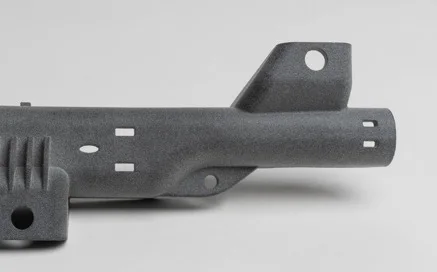
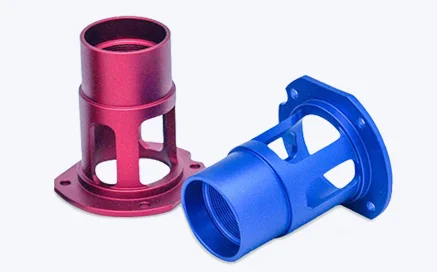
CNC machining is the most common manufacturing process for creating jigs and fixtures since volumes are typically low. In some cases, 3D printing is the most logical process when the geometry is too difficult or costly to machine. It is important to note that not all jigs and fixtures need to be made of metal. For many applications, plastic will reduce costs and meet your performance requirements.
Rapid manufacturing is not going to replace your current machine shops, but when utilised properly it can be a valuable tool for producing blanks for jigs and fixtures or less critical parts that do not require high precision. Konlida is able to maintain tolerances of ±0.13 mm for CNC machining.
For a handful of parts, we recommend our CNC machining capabilities for your most common jigs or fixtures. If your part requires a more intricate geometry that is difficult to machine, we would recommend 3D printing . For high volume needs, rapid injection moulding can produce 25 to 10,000+ parts in a number of engineering-grade thermoplastics.
For a deeper look at how 3D printing can produce complex geometries for jigs and fixtures, see our using 3D printing for jigs and fixtures guide.
Material Selection for Jigs and Fixtures
The choice of material for jigs and fixtures depends on the application requirements—including expected wear, operating temperature, and the forces they will encounter. For high-wear applications, materials such as hardened steel or wear-resistant plastics may be appropriate. For lighter-duty applications where weight reduction is beneficial, aluminium or engineering-grade plastics such as acetal (POM) or nylon can be effective choices.
For guidance on material selection across different applications, see our materials comparison guide . If you are facing supply chain constraints, our material alternatives for plastic injection moulding guide offers practical substitution options.
Summary Checklist for Jigs and Fixtures
| Consideration | Recommendation |
|---|---|
| Jig vs. Fixture | Jigs guide tools; fixtures hold workpieces |
| Material | Metal for high wear; plastic for cost and lighter weight |
| Manufacturing method | CNC machining for precision; 3D printing for complex geometry |
| Tolerances | ±0.13 mm achievable with CNC machining |
| Volumes | Low volumes: CNC or 3D printing; high volumes: injection moulding |
Need Help with Jigs and Fixtures?
Our applications engineering team can help you determine whether CNC machining, 3D printing, or injection moulding is the right approach for your jig or fixture requirements.