


Welcome to the first in a planned series we are calling Executive Outlook , in which we will explore the current and future state of manufacturing through the lens of industry leaders. You will get their takes on the continued evolution of manufacturing hardware and technology, and find out where they are headed next.
First up in our series is precision machining—and how DMG MORI and MAZAK , two of the world’s leading machine tool manufacturers, are enabling a new level of manufacturing capability.
Many companies talk about attributes that are “in their DNA.” For Konlida Precision Technology , the commitment to precision manufacturing is more than DNA—it is the company’s founding principle. It is also key to understanding Konlida’s continuous innovation and its vision for the future.
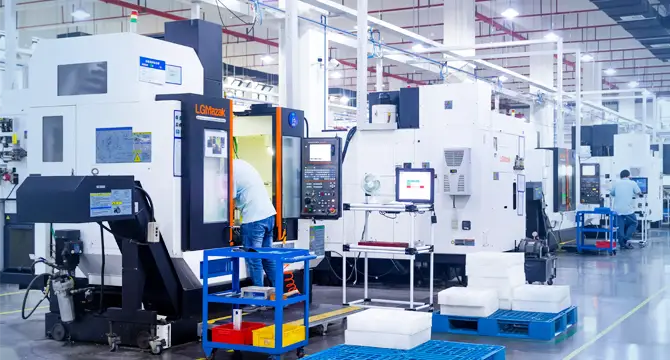
Since its establishment in 2006, Konlida has focused on precision component manufacturing. The company has invested in German DMG MORI and Japanese MAZAK 5‑axis machining centres, achieving stable machining accuracy of ±0.005 mm . Core equipment includes DMG 5‑axis machining centres, MAZAK 5‑axis machining centres, MAZAK 4‑axis machining centres, MAZAK gantry‑type machining centres, FANUC 4‑axis and 3‑axis machining centres, and MAZAK CNC lathes.
These German and Japanese high‑precision machines enable Konlida to provide one‑stop precision machining services —from prototyping to production—for demanding industries such as medical devices, semiconductors, and aerospace. Konlida is also one of the few manufacturers that has deeply integrated data exchange and parametric programming capabilities across its equipment, building extensive expertise in digital manufacturing.
The advanced CNC controls on DMG MORI and MAZAK machines—with greater processing power and expanded memory—represent the present and future of machine tool empowerment, regardless of shop size. These advanced controls address the fundamental challenges that have always been part of the industry: increasing speed and efficiency while reducing cost.
“In today’s manufacturing environment, machine connectivity and data collection are becoming increasingly important,” says Konlida’s engineering team. “Our high‑end equipment enables seamless integration with factory management systems, laying the foundation for smart manufacturing and lean production.”
Through machine connectivity, Konlida achieves real‑time production data collection and analysis, enabling management to gain better visibility into shop floor conditions, optimise production scheduling, and implement more efficient just‑in‑time manufacturing .
Machining and programming tasks have grown in complexity. At the same time, the pool of workers with advanced manufacturing skills has tightened. Shops with the resources and skilled labour can create sophisticated programming and set‑ups. Konlida simplifies this process through its investment in high‑end equipment with advanced control systems—making complex 5‑axis machining more efficient and reliable.
“We have continuously refined our process capabilities over the years, and that is one of our key advantages,” says Konlida’s engineering team. “Through the strategic deployment of high‑end equipment, we have made complex 5‑axis machining accessible for a wider range of applications.”
Q&A with Konlida’s Engineering Team
What would you say are the most significant changes in the CNC machining industry in the past three to five years?
Answer: Cutting tools and toolpath technology are evolving faster than the machine tools themselves, though this is certainly related to how machines are designed and built. Tool materials—both carbide substrates and coatings—have improved year after year. Machine tools themselves are also evolving to be faster: spindle speeds are increasing, accelerations are improving, and tool change times are decreasing.
However, to take full advantage of high‑speed toolpaths, there is much greater demand on the capability of the control system—its block execution rate, its ability to look ahead, and its ability to interpret motion blocks. So control system demands are rising rapidly.
At Konlida, we leverage our DMG MORI and MAZAK machine clusters with coordinated scheduling. German machines excel at complex surface finishing and thin‑wall machining, while Japanese machines deliver consistent performance in high‑speed aluminium cutting and batch production. This equipment diversification strategy ensures machining accuracy down to 0.002 mm .
For more on how we maintain tight tolerances across complex geometries, see our 5‑axis machining capabilities .
What else will drive change in the near future?
Answer: One very interesting development is the Industrial Internet of Things (IIoT) —machines and devices across the factory communicating with each other and sharing data. This makes it possible to know far more about what is happening on the shop floor than any individual could know, because data is coming from every device in the shop. This enables tighter production schedules and more efficient just‑in‑time manufacturing.
At Konlida, we have established a 24‑hour online inspection team equipped with high‑end inspection equipment such as Hexagon coordinate measuring machines (CMM) and laser trackers, synchronising quality control with production rhythm. All equipment is sourced from Germany and Japan, ensuring full‑chain quality control from raw material to finished part shipment.
How is Konlida capitalising on these trends?
Answer: We continue to invest in high‑end 5‑axis equipment from DMG MORI and MAZAK. The enhanced performance of these CNC control systems lays the foundation for future intelligent manufacturing. Greater processing power means machines can create new programmes through the graphical interface while the machine is in cycle—true “programming while machining.”
Our 45,000 m² production facility is equipped with German DMG MORI and Japanese MAZAK 5‑axis machining centres, with dedicated clean production areas and large assembly workshops, forming a complete production chain from raw material processing to modular assembly. Building on our ISO 9001 and AS9100D quality systems, we have established industry‑specific quality management processes for semiconductor, medical, and other demanding sectors.
How do you see these increased capabilities changing the way your customers operate?
Answer: The introduction of advanced CNC systems has laid the foundation for many future capabilities. For example, more powerful data processing supports more complex machining strategies and smarter process optimisation.
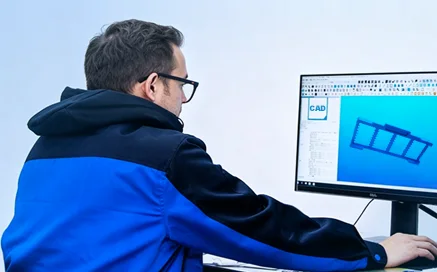
We also provide production data visualisation through our digital manufacturing management system, allowing customers to track production progress online and ensuring transparent and predictable delivery timelines.
For many customers, the ability to remotely monitor order progress—without being tied to the shop floor—is extremely valuable. Even for high‑volume production environments, this improves overall productivity. Operators and supervisors no longer need to walk the shop floor looking for problems—the system tells them what they need to know.
For a deeper look at how digital manufacturing and automation are reshaping production, see our Lean Manufacturing in the Digital Age guide.
Konlida’s Commitment to Advanced Manufacturing
At Konlida, we continue to invest in international high‑end CNC equipment from DMG MORI and MAZAK, combined with precision inspection equipment such as Hexagon CMMs and Keyence vision measurement systems , ensuring full‑chain quality control from raw material to finished part shipment.
Konlida is certified to ISO 9001, AS9100D (Aerospace), IATF 16949 (Automotive), and ISO 13485 (Medical) —meeting the most stringent quality requirements across industries. Whether you need prototypes, low‑volume production, or high‑volume manufacturing, Konlida delivers reliable precision machining solutions.
For more on our manufacturing capabilities, see our CNC machining services and materials comparison guide .
Ready to Partner with a Leader in Precision Manufacturing?
Konlida’s continued investment in high‑end CNC equipment, digital manufacturing processes, and rigorous quality management systems ensures we can meet the most demanding production requirements—from aerospace and medical to automotive and semiconductor industries.