

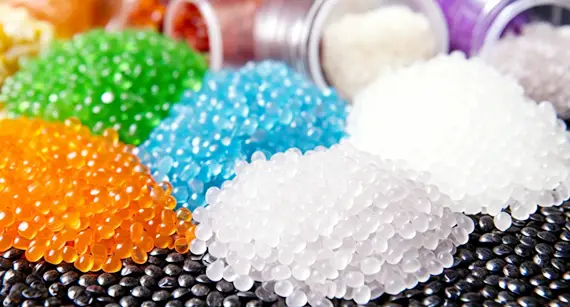

A breakdown of injection moulding thermoplastics including recommended applications and material properties
[Image: polycarbonate injection‑moulded part – manufactured for a customizable mounting system for tablets, laptops, and more]
More than 85,000 commercial options for plastic materials are listed in materials databases, and within those, 45 polymer families can be broadly classified into two categories: thermosets and thermoplastics. At Konlida Precision Technology, we primarily focus on the latter category, offering hundreds of stocked engineering‑grade thermoplastic resins through our rapid injection moulding service [Internal Link: /services/injection-molding/] (green). In addition to our stocked resins, we also support many customer‑supplied materials.
Narrowing down that extensive list can sometimes seem daunting, so we have prepared this outline of the benefits and applications of some of our most commonly moulded materials. By choosing the right material, you can improve the form, fit, and function of your parts.
For a complete material database, visit our [Internal Link: Materials Resource Center → /materials/] (green).
ABS (Acrylonitrile Butadiene Styrene)
Benefits: ABS is a tough, impact‑resistant plastic widely used across many industries. It has low shrinkage, high dimensional stability, and good resistance to acids and bases. ABS is relatively inexpensive and a good choice for hand‑held consumer devices.
Applications: Cosmetic parts, hand‑held devices, housings, mouldings for electrical tools, remote controls, computers, telephone components.
Considerations: ABS‑moulded parts may show knit lines and can have sink marks and voids in thick areas. Reducing sink may be achieved by switching to an ABS/PC blend. ABS also bonds well to PC parts.
[Internal Link: /materials/abs/] (yellow – optional)
ABS/PC
Benefits: ABS/PC combines the strength and heat resistance of polycarbonate with the flexibility of ABS. It also provides improved processing during injection moulding, increased toughness and dimensional stability, higher heat resistance than ABS alone, and better low‑temperature impact resistance than PC alone.
Applications: Typically used in automotive, electronic, and telecommunications industries.
Considerations: ABS/PC often minimises thick‑moulding concerns found in ABS or PC when moulded alone. It is frequently chosen when higher mechanical properties are required from ABS or when a lower‑cost PC is needed.
[Internal Link: /materials/abs-pc/] (yellow)
PC (Polycarbonate)
Benefits: PC is strong and extremely impact resistant, with low shrinkage and good dimensional stability. It is a transparent plastic available in optically clear grades. PC has good heat resistance and accepts high cosmetic finishes well.
Applications: Lenses, indoor and outdoor lighting, mobile phone housings, electrical components, medical devices, bullet‑resistant glazing.
Considerations: Thick sections may cause voids, bubbles, and sink. PC parts have poor chemical resistance. An ABS/PC blend is a good alternative for opaque parts with these issues; acrylic (see below) is another option for parts with thick geometries.
[Internal Link: /materials/polycarbonate/] (yellow)
PA or PPA (Aliphatic Polyamides – Nylons)
Benefits: Many types of nylons exist (PA 6, PA 6/6, PA 6/10, PA 6/12, PA 12, etc.), each with its own advantages. Generally, nylon parts provide high strength and high‑temperature strength – especially when reinforced – and are chemically resistant except to strong acids and bases. Some, like PA 6/6, offer great hardness, stiffness, and abrasion resistance. PA 6 is extremely hard and tough at low temperatures, while PA 6/12 has better impact strength.
Applications: Thin‑walled features, combs, spools, gears and bearings, screws, structural parts (with glass fibre), pump components, under‑hood automotive parts, cameras.
Considerations: Nylon can be more susceptible to warpage due to non‑linear shrinkage. If your part will be exposed to moisture, consider avoiding nylon as it is hygroscopic and will absorb moisture, causing dimensional and potentially structural issues.
[Internal Link: /materials/nylon/] (yellow)
POM (Polyoxymethylene – Acetal)
Benefits: POM is characterised by high toughness, stiffness, hardness, and strength. It has good lubricity, resistance to hydrocarbons and organic solvents, good elasticity, and a slippery surface – ideal for bearing surfaces and gears.
Applications: Gears, pumps and pump impellers, conveyor links, soap dispensers, fan and blower blades, automotive switches, electrical switch components, buttons and knobs.
Considerations: Due to shrinkage, parts must be designed with uniform wall thickness. Painting and coating POM parts is difficult because of their lubricity. Achieving a high‑cosmetic finish is also challenging. If a limited number of prototype parts are needed, POM can be easily CNC machined [Internal Link: /services/cnc-machining/] (green).
[Internal Link: /materials/pom-acetal/] (yellow)
PMMA (Polymethyl Methacrylate – Acrylic)
Benefits: PMMA has good optical properties, high gloss, and is scratch resistant. It also has low shrinkage and less sink in geometries with thin and thick sections.
Applications: Light pipes, lenses, light shades, optical fibres, signs.
Considerations: Acrylic can be brittle and thus more susceptible to stress cracking. PC is a good alternative if needed. Draft is always required – often twice the draft of other materials – due to brittleness. Acrylic also has poor chemical resistance.
[Internal Link: /materials/acrylic-pmma/] (yellow)
PP (Polypropylene)
Benefits: PP is an inexpensive resin option. Some grades have higher impact resistance; propylene homopolymer can be brittle in cold temperatures, while copolymers are more impact‑resistant. PP is wear‑resistant, flexible, can have very high elongation, and is resistant to acids and bases.
Applications: Integral hinges (“living hinges”), fans, snap‑over lids (e.g. shampoo bottle tops), medical pipette tubing.
Considerations: Thick sections may create voids and bubbles. Shrinkage and warpage may also occur. If the part has living hinges requiring higher stiffness, K‑Resin is a good alternative.
[Internal Link: /materials/polypropylene/] (yellow)
[Image: polypropylene injection‑moulded tennis racket weight]
PBT (Polybutylene Terephthalate)
Benefits: PBT provides good electrical properties for power components and works well for automotive applications. It has moderate to high strength depending on glass fibre content; unfilled grades are tough and flexible. PBT also has good resistance to fuels, oils, fats, and many solvents, and does not absorb flavours.
Applications: Slide bearings, gears and cams; coffee makers and toasters; hair dryer nozzles; vacuum cleaners; handles and knobs for electrical cookers.
Considerations: Glass‑filled PBT resins are prone to warpage and have poor resistance to acids, bases, and hydrocarbons. Thin parts can also be difficult to fill with PBT. Nylons should be considered as alternatives.
[Internal Link: /materials/pbt/] (yellow)
PPSU (Polyphenylsulfone)
Benefits: PPSU is a high‑temperature, dimensionally stable material with high toughness and heat resistance. It also resists radiation sterilisation, alkalis, and weak acids.
Applications: Medical instrument components, sterilisation trays, automotive fuses, interior aircraft parts, hot water fittings, sockets and connectors.
Considerations: PPSU is sensitive to thick sections, which may result in voids, bubbles, or sink. Organic solvents and hydrocarbons can attack PPSU. Colourant cannot be added to our stock PPSU resins.
[Internal Link: /materials/ppsu/] (yellow)
PEEK (Polyether Ether Ketone)
Benefits: PEEK is a high‑temperature, high‑performance resin used in medical, aerospace, and automotive industries for its heat resistance, flame retardancy, excellent strength, dimensional stability, and good chemical resistance.
Applications: Bearings, piston parts, pumps, cable insulation, ultra‑high vacuum components.
Considerations: PEEK is a high‑performance material and therefore very expensive. Ultem (PEI) (see below) is a slightly less costly option; PPSU is also worth considering if price is a concern.
[Internal Link: /materials/peek/] (green – strong)
PEI (Polyetherimide – Ultem)
Benefits: PEI (Ultem) is the second high‑temperature, high‑performance resin we offer. Like PEEK, it is used in medical, aerospace, and automotive industries for its heat resistance, flame retardancy, excellent strength, dimensional stability, and good chemical resistance.
Applications: Medical and chemical instrumentation, tableware, catering equipment, HVAC, fluid handling, electrical and lighting components.
Considerations: Ultem is also very expensive, though not as costly as PEEK. Look at PPSU as a possible alternative.
[Internal Link: /materials/ultem-pei/] (green – strong)
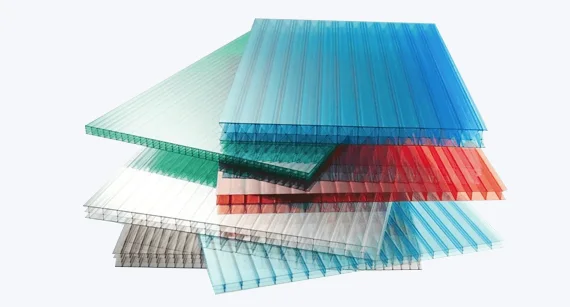
More Material Options and Information
Konlida has many additional stocked resin options including PPS, TPE, TPU, LCP, HDPE, LDPE, and PSU. Most resin properties can be improved by additives such as glass fibre and carbon fibre.
For material samples, contact our sales team at sales78@konlidacn.com.
We also offer a detailed white paper on the thermoplastic material selection process [Internal Link: /resources/thermoplastic-selection-white-paper/] (yellow), and our material comparison guide is an excellent resource when narrowing down plastics, metals, and elastomers [Internal Link: /resources/material-comparison-guide/] (green).