

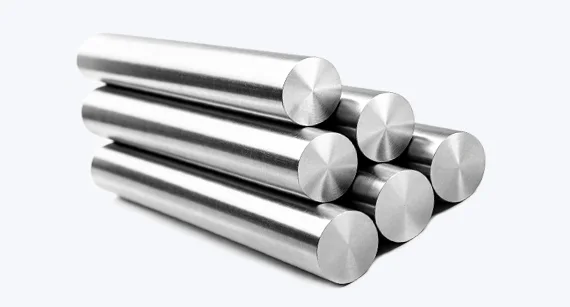

Lightweight Yet Durable: Titanium – An Excellent Choice for Aerospace Parts
A technical guide to Titanium Grade 5 (Ti‑6Al‑4V) for CNC machining and metal 3D printing
Titanium is widely regarded as one of the most versatile engineering materials available today. Its combination of high strength, low density, and exceptional corrosion resistance makes it a preferred choice for demanding applications – particularly in the aerospace, medical, and motorsport industries. This guide focuses on Titanium Grade 5 (Ti‑6Al‑4V) , the most commonly used titanium alloy, and examines its properties, applications, and manufacturing considerations for CNC machining and DMLS metal 3D printing.
Properties and Specifications
Titanium Grade 5 (Ti‑6Al‑4V) is an alpha‑beta titanium alloy containing 6% aluminum (as an alpha stabiliser) and 4% vanadium (as a beta stabiliser). It is the most widely used titanium grade, offering an exceptional balance of mechanical properties.
| Property | Value |
|---|---|
| Density | 4.43 g/cm³ |
| Tensile strength (ultimate) | 950–1,000 MPa |
| Yield strength (0.2% offset) | 880–950 MPa |
| Elastic modulus | 114 GPa |
| Elongation at break | 10–14% |
| Hardness (annealed) | 30–34 HRC |
| Hardness (solution treated & aged) | 35–39 HRC |
| Melting point | ~1,660°C |
| Thermal conductivity | 7.2 W/m·K |
| Coefficient of thermal expansion | 8.6 µm/m·K |
| Service temperature range | Cryogenic (–150°C) to +400°C |
Key Advantages
- High strength‑to‑weight ratio – approximately twice the strength of aluminium alloys at only 60% heavier, and significantly stronger than most stainless steels at half the weight
- Excellent corrosion resistance – forms a stable, protective oxide layer; resists seawater, chlorine, and many industrial chemicals
- Good fatigue resistance – suitable for cyclic loading applications
- Biocompatible – non‑toxic and compatible with human tissue (ISO 10993)
- Low thermal expansion – maintains dimensional stability across a wide temperature range
- Wide service temperature range – from cryogenic to 400°C
Limitations
- High material cost – significantly more expensive than aluminium, steel, and stainless steel
- Difficult to machine – low thermal conductivity, high strength, and work‑hardening tendency require specialised tooling and cooling strategies
- Limited electrical conductivity – poor conductor; not suitable for electrical applications
- Requires specialised welding techniques – contamination from oxygen, nitrogen, or hydrogen can cause embrittlement
For detailed material data sheets, see our Materials Comparison Guide.
Titanium in the Aerospace Industry
The aerospace industry is the largest user of titanium alloys, and for good reason. Weight reduction is critical in aviation – every kilogram of weight saved translates directly into fuel savings, increased payload capacity, or extended range. Titanium's strength‑to‑weight ratio makes it an ideal material for structural and engine components that must withstand extreme conditions.
Common Aerospace Applications
- Jet engine components – compressor blades, discs, and casings
- Airframe structures – wing spars, fuselage frames, and landing gear components
- Fasteners – bolts, screws, and rivets requiring high strength and corrosion resistance
- Rocket engine cases and pressure vessels
- Helicopter rotor hubs and transmission components
- Spacecraft structures – capsules, satellite brackets, and deployment mechanisms
For more on aerospace manufacturing, see our aerospace industry solutions.
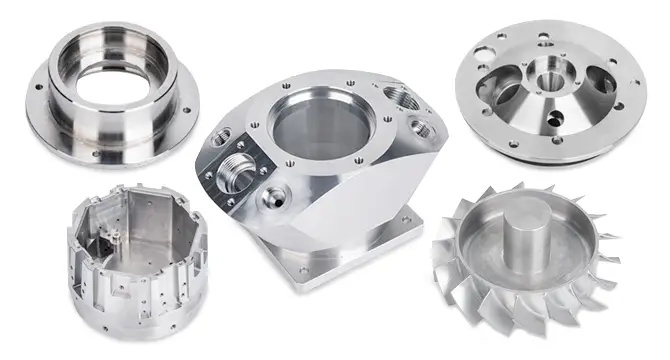
Manufacturing Considerations for Titanium
CNC Machining
Machining titanium presents unique challenges. Its low thermal conductivity (approximately 7.2 W/m·K – compared to aluminium at 167 W/m·K) means that heat generated during cutting is not conducted away from the cutting zone, leading to rapid tool wear. Additionally, titanium's high strength and work‑hardening tendency require careful machining strategies.
Best practices for machining titanium:
- Use sharp, positive‑rake carbide tooling with wear‑resistant coatings (TiAlN, AlTiN)
- Maintain high coolant pressure and flow rate to evacuate chips and reduce heat
- Use low cutting speeds – typically 30–60 m/min with carbide tools
- Maintain consistent feed rates – avoid dwell or feed interruptions that can cause work hardening
- Use rigid machine setups – minimise vibration and deflection
For machining guidelines, see our CNC milling design guidelines [Internal Link: /services/cnc-machining-service/cnc-milling/design-guidelines/] and CNC turning design guidelines [Internal Link: /services/cnc-machining-service/cnc-turning/design-guidelines/].
DMLS Metal 3D Printing
Titanium Grade 5 is also available through our DMLS metal 3D printing service in powder form. DMLS offers several advantages for titanium parts:
- Complex geometries – internal channels, lattice structures, and organic shapes that cannot be machined
- Near‑net shape – minimal material waste (critical for expensive titanium)
- Mechanical properties – DMLS Ti‑6Al‑4V achieves properties comparable to wrought annealed material (≥99.5% density)
- Consolidation – multiple components can be combined into a single printed part
For more on DMLS, see our DMLS capability page [Internal Link: /services/3d-printing/direct-metal-laser-sintering/].
Finishing Options for Titanium Parts
Titanium parts can benefit from surface treatments to enhance appearance and corrosion resistance.
Chromate Conversion Coating (Chromate Plating)
Chromate plating is a chemical conversion coating that provides a thin, protective layer on titanium surfaces. It offers:
- Corrosion protection – extends part life in aggressive environments
- Uniform appearance – consistent cosmetic finish (dull grey to bright)
- Low electrical resistance – maintains conductivity (unlike anodising)
Available options:
| Type | RoHS Compliant | Characteristics |
|---|---|---|
| Type I (Yellow) | No | Maximum corrosion protection; contains hexavalent chromium (restricted under REACH/RoHS) |
| Type II (Clear) | Yes | Good corrosion protection; trivalent chromium; electrically conductive |
Titanium Anodising
Anodising is also available for titanium parts. Unlike chromate plating, anodising is an electrochemical process that produces a coloured oxide layer. The colour is voltage‑dependent:
| Voltage Range | Colour |
|---|---|
| 10–30 V | Bronze to purple |
| 50–70 V | Blue |
| 80–100 V | Gold |
| >100 V | Green to pink |
Anodising provides corrosion resistance and cosmetic appeal, particularly for medical devices and consumer products.
For more finishing options, see our finishing services page.
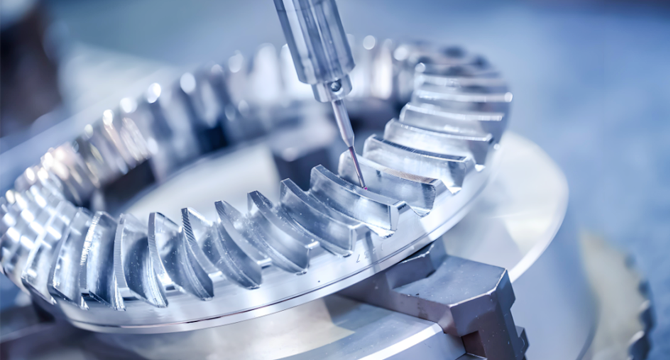
Titanium vs. Aluminium – A Brief Comparison
| Attribute | Titanium Grade 5 | Aluminium 7075 |
|---|---|---|
| Density (g/cm³) | 4.43 | 2.81 |
| Tensile strength (MPa) | 950–1,000 | 572 |
| Specific strength (strength/density) | ~220 | ~204 |
| Elastic modulus (GPa) | 114 | 72 |
| Fatigue strength | Excellent | Moderate |
| Corrosion resistance | Excellent | Good |
| Machinability | Difficult (requires specialised tooling) | Good |
| Cost | High (€80–120/kg) | Low (€5–8/kg) |
| Typical application | Aerospace, medical, marine | General structural, automotive |
For a detailed comparison, see our titanium vs. aluminum guide [Internal Link: /titanium-vs-aluminum-workhorse-metals-for-machining-and-3d-printing/].
Summary – When to Choose Titanium
Choose Titanium Grade 5 When:
- High strength‑to‑weight ratio is critical
- Corrosion resistance is required in aggressive environments (seawater, chemicals)
- Service temperatures range from cryogenic to 400°C
- Biocompatibility is required for medical applications
- Fatigue resistance is important for cyclic loading
- Thermal expansion must be minimised
Consider Alternatives When:
- Cost is the primary constraint – aluminium or steel may be more economical
- Electrical conductivity is required – titanium is a poor conductor
- High‑volume production without complex geometries – machining is slow compared to aluminium
- Surface finish requirements are extremely high – titanium requires specialised finishing
Need Help with Your Titanium Project?
Our applications engineering team has extensive experience in machining and printing titanium components for aerospace, medical, and motorsport customers across Europe. We can help you evaluate trade‑offs, optimise your design, and select the right manufacturing process.