

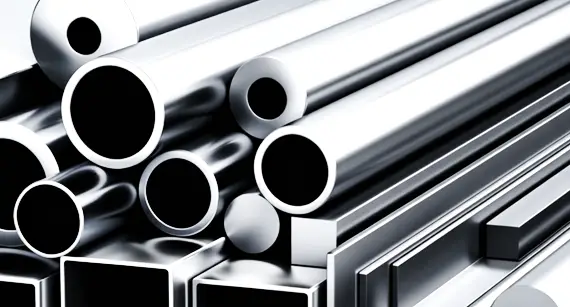

1018 vs. 4140 Steel: Choosing Between Two Great Metals
A practical comparison of low‑carbon and alloy steels for CNC machining
Selecting the right steel grade for your project can be challenging. With dozens of options available, it is easy to become overwhelmed. Two of the most common and popular steel grades – 1018 and 4140 – each offer a distinct set of properties. This guide compares them to help you make an informed decision for your CNC machining project.
1018 Steel – The Low‑Carbon Workhorse
1018 is a low‑carbon (mild) steel containing approximately 0.18% carbon. It is one of the most widely used grades for general engineering applications.
Key Properties
| Property | Value |
|---|---|
| Carbon content | 0.18% |
| Tensile strength | ~440 MPa |
| Yield strength | ~370 MPa |
| Hardness (Brinell) | ~130 HB |
| Machinability | Excellent |
| Weldability | Excellent |
| Formability | Excellent (can be bent, swaged, crimped) |
| Hardenability | Limited to case hardening (carburising) |
| Corrosion resistance | Poor (requires plating or painting) |
| Cost | Low |
Common Applications
- Mounting plates and brackets
- Pump parts and motor shafts
- Tie rods
- Pins and bushings
- General structural components
Advantages
- Excellent machinability – high cutting speeds, long tool life
- Superior weldability – can be welded without pre‑ or post‑heat treatment
- Good formability – easily bent, swaged, or crimped
- Low cost – one of the least expensive steel grades
Limitations
- Cannot be through‑hardened – only case hardening is possible
- Poor corrosion resistance – requires surface protection (plating, painting, or oiling)
- Lower strength compared to alloy steels
4140 Steel – The High‑Tensile Alloy Steel
4140 is a chromium‑molybdenum (chromoly) alloy steel containing approximately 0.40% carbon, along with small amounts of chromium and molybdenum. It is classified as a high‑tensile steel and is widely used in demanding engineering applications.
Key Properties
| Property | Value |
|---|---|
| Carbon content | 0.40% |
| Chromium content | 0.80–1.10% |
| Molybdenum content | 0.15–0.25% |
| Tensile strength (annealed) | ~655 MPa |
| Tensile strength (quenched & tempered) | up to 1,100+ MPa |
| Hardness (annealed) | ~200 HB |
| Hardness (heat‑treated) | up to 58 HRC |
| Machinability | Good (moderate) |
| Weldability | Fair (requires pre‑heat and post‑weld treatment) |
| Formability | Limited (not suitable for cold forming) |
| Corrosion resistance | Moderate (better than 1018) |
| Cost | Moderate–high |
Common Applications
- Connecting rods and crankshafts
- Gears and shafts
- Machine tool components
- Jigs, moulds, and fixtures
- Oil and gas industry components
- Aerospace and automotive structural parts
Advantages
- High strength – ultimate tensile strength up to 1,100+ MPa when heat‑treated
- Excellent toughness – good impact resistance and torsional strength
- Through‑hardenable – can be hardened to 58 HRC or higher
- Good fatigue strength – 2–3× higher than 1018
- Better corrosion resistance than plain carbon steels
- Good heat resistance – retains properties at elevated temperatures
Limitations
- Lower machinability – requires lower cutting speeds and feeds than 1018
- Poorer weldability – requires pre‑heating and post‑weld heat treatment to avoid brittleness
- Limited formability – not suitable for cold working operations
- Higher cost – more expensive than 1018
- Reduced ductility when heat‑treated to high hardness
Chemical Composition Comparison
| Element | 1018 Steel | 4140 Steel |
|---|---|---|
| Iron | 98.81–99.26% | 96.79–97.78% |
| Carbon | 0.18% | 0.40% |
| Manganese | 0.60–0.90% | 0.75–1.00% |
| Phosphorus (max) | 0.04% | 0.035% |
| Sulfur (max) | 0.05% | 0.040% |
| Chromium | – | 0.80–1.10% |
| Molybdenum | – | 0.15–0.25% |
The addition of chromium and molybdenum in 4140 significantly improves strength, hardness, corrosion resistance, and high‑temperature performance.
Mechanical Property Comparison
| Property | 1018 Steel | 4140 Steel |
|---|---|---|
| Ultimate tensile strength (MPa) | ~440 | ~655 (annealed) / >1,100 (heat‑treated) |
| Yield strength (MPa) | ~370 | ~415 (annealed) / >900 (heat‑treated) |
| Hardness | ~130 HB | ~200 HB (annealed) / up to 58 HRC (heat‑treated) |
| Fatigue strength | Moderate | 2–3× higher than 1018 |
| Machinability rating | Excellent (≈85% of free‑cutting steel) | Good (≈65% of free‑cutting steel) |
| Weldability | Excellent | Fair (requires special procedures) |
| Formability | Excellent | Limited |
1018 vs. 4140 – Which Should You Choose?
Choose 1018 Steel When:
- Weldability is critical – 1018 welds easily without pre‑ or post‑heat treatment
- Formability is required – parts need to be bent, swaged, or crimped
- Strength requirements are moderate – yield strength of ~370 MPa is sufficient
- Cost is a primary factor – 1018 is significantly less expensive
- Through‑hardening is not required – case hardening is acceptable
- Parts will be protected from corrosion – plating or painting is acceptable
Choose 4140 Steel When:
- High strength is required – tensile strength >1,100 MPa
- Through‑hardening is needed – parts must be hard throughout
- Impact resistance and toughness are critical – high torsional strength required
- Fatigue resistance is important – product life and durability are concerns
- Moderate corrosion resistance is needed – better than 1018 in corrosive environments
- Parts will operate at elevated temperatures – up to ~400°C with minimal property loss
Machining and Manufacturing Considerations
Machining
- 1018: Excellent machinability. High cutting speeds and feed rates, long tool life. Suitable for high‑volume production.
- 4140: Moderate machinability. Requires lower cutting speeds and feeds. Tool wear is greater than with 1018, especially in the heat‑treated condition.
For machining guidelines, see our CNC milling design guidelines and CNC turning design guidelines.
Welding
- 1018: Excellent weldability. No pre‑heat or post‑weld heat treatment required.
- 4140: Fair weldability. Requires pre‑heating (typically 150–200°C) and post‑weld heat treatment to prevent hydrogen cracking and maintain mechanical properties.
Heat Treatment
- 1018: Cannot be through‑hardened. Case hardening (carburising or nitriding) can produce a hard surface layer (up to ~60 HRC) with a soft, ductile core.
- 4140: Can be through‑hardened by quenching and tempering. Achievable hardness ranges from 28–58 HRC depending on tempering temperature.
Surface Finishing
Both grades can be finished with plating (zinc, nickel, chromium), black oxide, or painting for corrosion protection. For aluminium parts, we also offer anodising – though this does not apply to steel.
Cost Comparison
| Factor | 1018 | 4140 |
|---|---|---|
| Raw material cost | Low | Moderate–high |
| Machining cost | Low | Moderate (slower speeds, more tool wear) |
| Heat treatment cost | Low (case hardening only) | Moderate–high (quench & temper) |
| Welding cost | Low | Moderate (pre‑/post‑heating) |
| Total part cost | Lower | Higher |
Summary Decision Matrix
| Requirement | 1018 | 4140 |
|---|---|---|
| Highest strength | ✓ | |
| Through‑hardening | ✓ | |
| Impact resistance | ✓ | |
| Fatigue resistance | ✓ | |
| Excellent weldability | ✓ | |
| Good formability | ✓ | |
| Low cost | ✓ | |
| Corrosion resistance | ✓ | |
| High‑temperature performance | ✓ | |
| Machinability | ✓ |
Need Help Choosing?
Our applications engineering team can help you evaluate the trade‑offs between 1018 and 4140 for your specific application. Factors such as part geometry, functional requirements, environment, and production volume all influence the optimal material choice.