

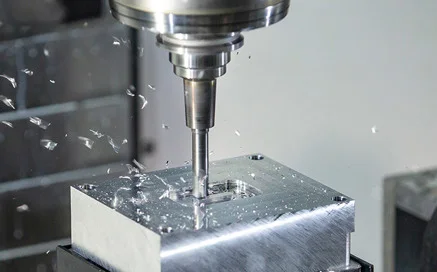

Get reduced costs, quick-turn lead times, and finishing options from a single-source supplier
You already know that CNC machining at Konlida Precision Technology is different from traditional manufacturing. Our process is fully automated – from CAD analysis to auto‑toolpathing and digital inspections – delivering exceptional speed. This automation enables our rapid turnaround, and you can take advantage of it when moving to higher‑volume production or simply needing more than 15 prototypes.
Machining also works well for jigs, tools, fixtures, and other low‑volume parts, offering flexibility and affordability.
This guide covers the ins and outs of our higher‑volume machining capabilities, including pricing, lead times, finishing options, and more.
Machining for Higher‑Volume Needs
At Konlida, we fill the production‑quantity gap while solving upfront‑ and warehousing‑cost issues. Our machining capacity – with over 90 advanced CNC machines (including DMG MORI and MAZAK 5‑axis centres) – can mill or turn parts as fast as one day for rapid prototyping, and also serves low‑volume, end‑use part production. This brings down machining costs without adding lead time.
The nominal price‑break point between quick‑turn prototyping and production machining is approximately 15 parts. Production machining also assures part quality with FAI reporting, Certificate of Conformance (CoC) documentation, and certifications such as ISO 9001 and AS9100D.
Production machining does not offer the same economies of scale as moulding or casting – especially at very high volumes (tens of thousands or more). However, as machined production volume increases, cost per part decreases (typical low‑volume runs from dozens to a few thousand). Production machining also solves warehousing and inventory issues, providing supply chain flexibility by producing parts on‑demand. In many cases, customers find our machining service allows them to use a single‑source supplier from concept validation to short‑run production.
Machining for Production Provides Supply Chain Flexibility
Many machine shops can produce machined parts. Konlida offers key advantages, particularly when you need production volumes relatively quickly or varying quantities. With our capacity, we can produce higher volumes faster than typical shops.
Our end‑to‑end process begins with design analysis and quotes. Upload a CAD model to receive a free analysis and quote within hours. If you need prototypes, request a quick‑turn quote and get finished parts in as fast as one day. When ready for higher volumes, request a production quote and get parts in as few as five days. Our capacity, plus a large stock of materials, enables this speedy turnaround. The entire production process – from toolpath development to machining to finishing – is handled in‑house for maximum speed, quality, and process control.
Leveraging machining eliminates the high initial costs of mould or die production. Once the toolpath is developed, you can order machined parts in lots as small as 15 pieces. If your ultimate production volume will be high enough to justify moulding or casting, you can use machining for bridge production to take your product to market while production tools are being made.
For design guidance, refer to our CNC Milling Design Guidelines and CNC Turning Design Guidelines.
Production Machining of Plastics
At volumes of 1,000 or fewer, machining plastics can be less expensive than injection moulding. Machining can produce parts that would be difficult to mould – including those with uneven wall thicknesses or wall thicknesses over 3.81 mm, often needed for fixtures or wear plates.
The speed advantage of machining versus injection moulding at modest production volumes increases with part size. Machining plastic eliminates the risks of sink, warp, and knit lines that can occur in moulded parts, and machined parts do not require draft angles as injection‑moulded parts do.
In some cases, engineers might consider 3D printing for these volumes. However, machined parts are cut from solid billet, offering advantages: greater physical integrity (no layering), ability to use materials not available for 3D printers, and smoother achievable finishes.
Plastic production materials at Konlida (maximum part size: 178 mm × 381 mm × 44 mm):
| Plastic Material | Maximum Part Size (mm) |
|---|---|
| ABS | 178 × 381 × 44 |
| Acetal (POM) – black, white | 178 × 381 × 44 |
| Acetal Copolymer – black, natural | 178 × 381 × 44 |
| PEEK – black, natural | 178 × 381 × 44 |
| PEI (Ultem) | 178 × 381 × 44 |
For a complete list of machining materials, visit our Materials Comparison Guide.
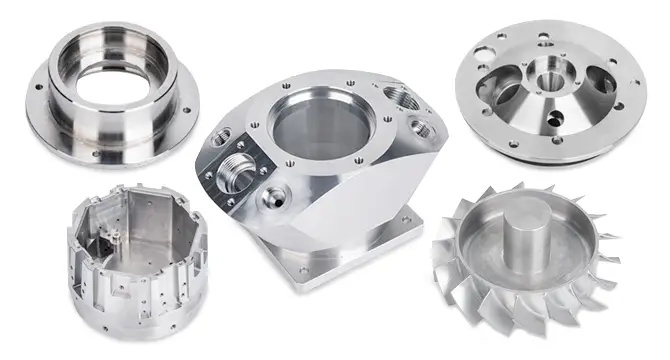
Production Machining of Metal
At low‑ to medium‑production volumes, machining of end‑use metal parts offers significant advantages over die casting. As with plastics, at appropriate volumes, machining is faster and less expensive than casting.
Machining can begin turning out parts immediately, while die casting requires production of hardened steel tooling – a slow and costly process. Many more metals can be machined than can be die cast. Die casting leaves a rough surface (similar to cast iron cookware), which may require secondary machining to smooth. Die cast metal can also be porous, brittle, and subject to elongation. For these reasons, machining may still be preferable even when casting has a cost advantage.
Metal production materials at Konlida:
| Metal Material | Maximum Part Size (mm) |
|---|---|
| Aluminium 6061 | 178 × 381 × 76 or 381 × 457 × 44 |
| Aluminium 7075 | 178 × 381 × 76 or 381 × 457 × 44 |
| Steel 1018 | 178 × 381 × 44 |
| Steel 4140 | 178 × 381 × 44 |
Metal Finishing Options: Anodising and Chromate Plating
Once parts are machined, we offer a variety of finishing options:
- Type II, RoHS compliant anodising – Class 1 (clear), Class 2 (black)
- Chromate plating – Type I, Type II, Class 1A and Class 3
Anodising and chromate plating are effective for corrosion protection and can enhance appearance. Our anodising processes are RoHS compliant, meaning they contain very low levels of mercury, lead, cadmium, hexavalent chromium, PBBs, or PBDEs. Chromate plating is a conversion coating (no metal added) that changes the surface character. Both offer excellent corrosion protection.
For more finishing options, see our Surface Finish Guide [Internal Link: /resources/cnc-surface-finish-guide/].
Threading Options for Machining
Our CNC machining service can add threaded features to milled and turned parts. Threads are specified within our automated interactive quotes. We offer a selection of UNC, UNF, NPT, metric, and standard HeliCoil threads. On both milled and turned parts, threaded holes must be modelled at the proper diameter. For detailed specifications, refer to our Threaded Holes Guidelines [Internal Link: /resources/threaded-holes-guidelines/], which includes a maximum‑reach table.