


How engineering-grade thermoplastics replace metals in demanding applications
Plastics have evolved over the last 50+ years – from housings and panels that reduced weight, eliminated sharp edges, and added styling options, to today’s engineering grades like PEI and PEEK that increase part performance or replace metals.
While in engineering terms we often think of plastics as reducing cost while increasing mass production capability or design freedom through moulding versus formed parts, we cannot always shake the perception that plastic is “cheap” in the eyes of some customers. However, today’s plastics are lightweight, strong, and versatile, and can be injection moulded, CNC machined, or 3D printed.
Two of the most common specialised materials for harsh environments are PEEK (polyether ether ketone) and PEI (polyetherimide), known by the brand name Ultem. These two plastics share many characteristics, but there are distinct reasons to choose one over the other.
The Basics of PEI and PEEK Plastics
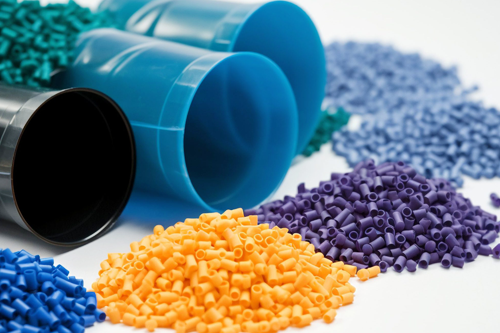
Both PEEK and PEI are considered high‑performance plastics. Depending on the grade, they are available as blocks, rods, powders, or pellets. Parts made from PEEK or PEI are typically used in environments where temperature or chemical exposure could be an issue – they are specialised plastics for very specific applications. For less demanding uses, PC, ABS, PA, or acetal (POM) are more common and considerably less expensive.
If you need an injection‑moulded part that matches your branding colours, note that PEI and PEEK melt at very high temperatures. Customers can supply their own pre‑coloured material that contains compatible colorants capable of withstanding the heat without shifting colour. Konlida also offers custom colour matching and other finishing options for moulding.
Always review material performance data from manufacturer datasheets, paying attention to grades and formulations, then cross‑reference them with your application requirements. Resin manufacturers provide excellent technical support to guide your selection.
For a comprehensive overview of CNC machining, including design tips, tolerances, and material selection, download our CNC Machining Guide [Internal Link: /resources/cnc-machining-guide/].
Comparing Types of PEI Plastics
At Konlida, we stock several types of PEI, including RTP 2100 LF, Ultem 2200 (20% glass fibre), Ultem 1000, and Ultem 2300 (30% glass fibre). All are suitable for injection moulding, but only Ultem 1000 and 2300 are also available for CNC machined parts. Key benefits: high heat resistance, impact resistance, and strength.
| Material | Injection Moulding | CNC Machining |
|---|---|---|
| RTP 2100 LF | ✓ | |
| Ultem 2200 (20% GF) | ✓ | |
| Ultem 1000 | ✓ | ✓ |
| Ultem 2300 (30% GF) | ✓ | ✓ |
Glass fibre (GF) is sometimes added to PEI to improve heat resistance or resist compression. Other additives provide additional benefits:
- Carbon fibre – lighter weight, high strength, helps deflect heat and reduce electrical conductivity.
- Teflon (PTFE) – adds lubricity (slipperiness); used in ball bearings and pivot joints.
- Silicon dioxide (SiO₂) – increases strength.
Comparing Types of PEEK Plastics
Konlida offers standard PEEK for CNC machining and Victrex 450G for injection moulding. PEEK products have excellent wear resistance and can be made even stronger with additives in injection‑moulded parts. Other benefits include chemical resistance, sterilizability, stiffness, and strength. Many of the same additives used in PEI can be pre‑compounded into PEEK.
| Material | Injection Moulding | CNC Machining |
|---|---|---|
| PEEK (standard) | ✓ | |
| Victrex 450G | ✓ |
For detailed material data sheets, visit our Materials Resource Center.
Who Uses PEEK and PEI Products?
PEI is widely used in aerospace (cabin panels), medical devices (withstands high sterilisation temperatures), electronics, appliances, oil & gas, and food‑contact applications (certain grades). Its ability to endure repeated autoclave cycles – typically 121 °C to 134 °C – makes it ideal for medical instruments.
PEEK is chemically inert – it resists almost all chemicals, including sulfuric or nitric acid. Common applications: food industry parts, semiconductors, electronics, oil & gas, aerospace, and medical equipment. Its continuous service temperature can reach 250 °C, and it maintains mechanical properties even in harsh environments.
Conclusion: Consider Part Performance Needs and Cost
Performance does not come cheap. PEI costs approximately 15–20 times more than common plastics like ABS or PC. PEEK, given its superior specifications, can cost roughly twice as much as PEI.
PEI is generally more forgiving in injection moulding processing and tooling. PEEK can be trickier and more difficult to process; due to its high‑temperature performance, using PEEK may result in potentially more costly tooling.
Your decision to use PEEK or PEI comes down to two factors: part performance needs and cost. If your part will be exposed to chemically aggressive or prolonged high‑temperature environments (e.g. above 150 °C continuously), a high‑performance plastic that is non‑reactive is essential. While we often focus on cost over capability, industry standards or approved material lists may justify the added expense for performance and longevity. Sometimes, PEI and PEEK are the answer.
For detailed information on all thermoplastics stocked by Konlida, including extensive data sheets for injection moulding and CNC machining, visit our Materials Comparison Guide [Internal Link: /materials/comparison-guide/].