

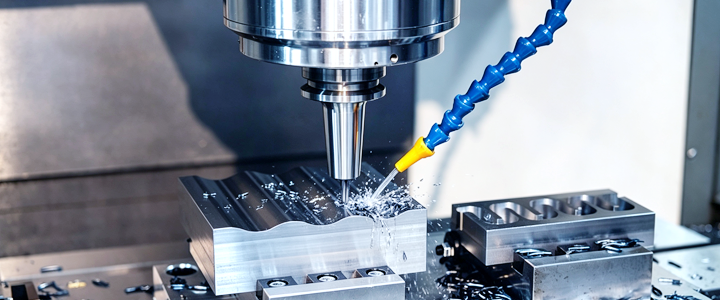

Incorporate these design and material considerations to reduce your machining expenses
CNC machining keeps improving and advancing every year, and, therefore, becomes a bit more complex. As a result, it can be challenging to keep pace with the dos and don'ts of part design. But lowering the cost of machined parts while improving functionality can still be achieved by a few relatively simple adjustments to your part design or material selection.
At Konlida Precision Technology, we use automated quoting software to evaluate parts and highlight features that need design consideration based on a process developed around rapid production. The software will catch unmanufacturable features upfront (or features that require additional tools and equipment). It will also highlight areas that do not necessarily require change but can improve the design’s overall machinability — corner pockets, engraved text, thin walls, deep pockets and holes, and complex geometries.
Here are tips to help you design more cost‑effective machined parts.
1. Provide Relief to Corner Pockets
Consider the corners of a machined pocket — the inside of an electronics housing, perhaps, or a bracket used to capture the body of a rectangular component. One common design oversight is leaving the intersection of vertical walls perfectly sharp.
To illustrate, imagine machining a stainless steel box to hold a collection of cards. The only way to get perfectly square vertical corners is with <span style="background-color: #fff3cd;">electrical discharge machining (EDM)</span> (→ /services/edm/) or by bolting multiple flat plates together — both slow and expensive.
Instead, we equip our machining centres with the smallest available end mill to clean out the corners. In 304 stainless steel, that means a 0.8 mm end mill, leaving a corner radius of 0.4 mm. That is quite sharp, but depth is limited. The length of most steel‑cutting end mills in this size range maxes out at five times the cutter diameter. Machining with such small tools is slow and delicate, driving up cost due to added milling time.
A more budget‑friendly approach is machining a relief in each corner of the pocket. This removes the radius, leaving a U‑ or C‑shaped clearance instead. It also allows for far deeper pockets — by cutting a 6.35 mm wide relief in each corner, functionally sharp corners to about 32 mm depth are possible. By switching to aluminium or even plastic, pocket depths twice that of steel are achievable. Best of all, designing pockets this way reduces part cost, since larger end mills can be used and material removal rates increased.
2. Deburr Edges Yourself
Avoiding corner breaks is another radius‑related, cost‑cutting measure. In an attempt to remove burrs and break sharp corners, designers often smooth external part intersections with chamfers or corner radii. This is understandable and sometimes necessary, but it can be expensive.
With metal parts, Konlida provides an automated deburring option. Plastics are delivered as‑machined or with sharp edges per the illustration. If the part design calls for an edge break, we must use an additional tool (a ball end mill) and machine these corners using a 3D profiling motion. We generally run these tools at high RPM, removing small amounts of material, but it is still a lengthy process to go back and forth until each corner is smooth. Many customers opt to save money by deburring these parts themselves with a file, abrasive paper, or a buffing wheel.
3. Avoid Text Until Moulding
Text engraving is aesthetically pleasing but time‑intensive. Again, a ball end mill is used to trace letters, numbers, and symbols from the CAD model. It looks cool and might be a valid requirement, but it is probably more appropriate on <span style="background-color: #d4edda;">injection‑moulded parts</span> (→ /services/injection-molding/), where additional machining time is amortised over higher part volumes.
Because of our tool sets for metals versus plastics, we have a minimum feature size of 0.90 mm in metals and 0.51 mm in plastic. Small tool diameters add machining time — consider removing text or logos from machined prototypes.
<span style="background-color: #fff3cd;">Read our guide on design for injection moulding</span> (→ /resources/injection-molding-design/).
4. Be Cautious of Thin Walls and Features
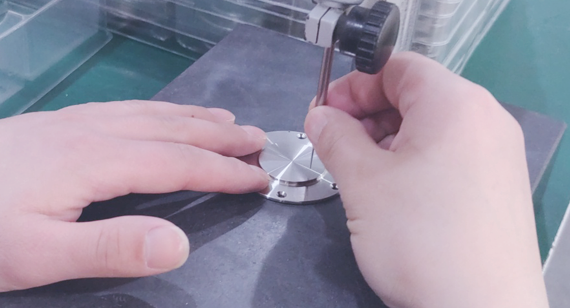
Our standard part tolerance is ±0.13 mm (<span style="background-color: #d4edda;">ISO 2768‑f</span> for metals, ISO 2768‑m for plastics) (→ /quality-certifications/). If you have a feature that is 0.51 mm or smaller, our automated quoting system will highlight it as a thin‑wall geometry. We will still allow it to be machined, but the machined part may differ slightly from your original design.
Any thin walls 0.51 mm or less are not only subject to breakage during machining but may also flex or warp afterwards. Beef them up as much as your part design allows.
5. Keep It Simple
Very deep pockets are problematic, even if corners are relieved. Not only does it take a lot of machining time to remove all that material, but any residual stress in the raw material tends to appear as pockets get deeper and walls taller. Gussets or support structures might be used to prevent movement due to stress, but these increase costs.
The same principle applies to overall part geometry. Do not attempt to make parts do more than they should. Maximising material usage may create workholding or machining problems, increasing costs.
If the design becomes too complex, consider breaking it into multiple components that can be bolted or screwed together. No one likes assembly costs or the complexity of multiple pieces, but it may be the best approach for difficult‑to‑machine parts if speed is a requirement.
Sculptured surfaces, cavernous slots (think heatsinks), super deep holes (hydraulic manifolds), and threads — these are some of the common machining cost drivers that can eat into your project budget.
<span style="background-color: #d4edda;">Learn more about design for CNC machining</span> (→ /resources/cnc-machining-guide/).
6. Explore Alternative Materials
One of the simplest ways to stay within budget — assuming it meets your requirements — is switching to a more machine‑friendly or less expensive material. Konlida’s <span style=”background-color: #d4edda;”>material selection</span> (→ /materials/) includes a range of metals and plastics, each with its own engineering attributes, aesthetics, machining considerations, and material cost.
Key material considerations:
- 17‑4 PH stainless steel is difficult to cut. If high strength and corrosion resistance are not critical, try 316L or 304 instead.
- Copper is an excellent electrical conductor but far more expensive than aluminium. Aluminium has roughly 60% of the electrical conductivity of copper, but the weight and cost savings may drive you to reconsider.
- If hardness is a concern, 4140 might be your first choice, but 1018 is very low cost and takes an admirable case hardening.
- Brass is a soft metal that is easy to mill and may have the mechanical, chemical, or conductive properties needed for your application.
- On the plastics side, we offer dozens of materials. All are relatively easy to cut, which often — but not always — equates to lower part cost. Some plastics offer superior wear, corrosion, or chemical resistance; others perform well under heat or flame; still others offer excellent strength, impact, or electrical properties. Typically, the softer the material, the more risk for dimensional stability and stringing during milling.
<span style=”background-color: #fff3cd;”>Not sure which material to choose? View our complete material list</span> (→ /materials/) or <span style=”background-color: #d4edda;”>contact our application engineers</span> (→ /contact-us/) for advice.
Final Thoughts
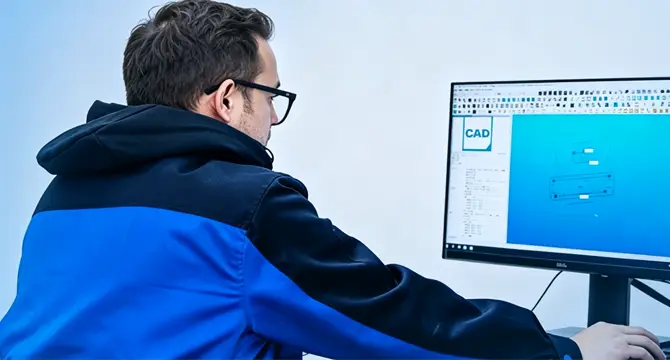
When you upload a CAD model to our website, our quoting tool calculates what can be machined within our capabilities and what carries risk. The conclusions are clearly spelled out in the quote, giving you a chance to adjust the part design and spin the quoting wheel again.
For any questions or design reviews, our application engineering team is ready to help.