

Technical guide to anodising and chromate conversion coatings for aluminium, titanium, and other alloys
Anodising and chromate plating (conversion coating) are highly effective methods to protect CNC machined or sheet metal parts from wear and corrosion. While these finishes are commonly applied to aluminium and titanium, they can also protect steel, stainless steel, copper, and other metals. Beyond corrosion resistance, both processes enhance the cosmetic appearance of metal parts.
For a full overview of finishing options, see our Finishing Services page.
1. What is Anodising?
Anodising is an electrochemical process that thickens the natural oxide layer on metal surfaces. Using aluminium as an example:
- The aluminium part is immersed in an acid electrolyte bath (typically sulfuric acid, 10–20% concentration).
- The part acts as the anode (positive electrode), and a cathode (e.g. lead or stainless steel plate) is placed in the bath.
- An electric current is passed through the solution. Oxygen ions from the acid react with aluminium to form a dense, porous layer of aluminium oxide (Al₂O₃).
- The resulting oxide layer is much thicker (5–25 µm for decorative anodising, 25–150 µm for hard anodising) than the natural oxide (2–3 nm).
The porous structure allows for dyeing (organic or inorganic pigments) before sealing. After dyeing, the pores are closed by boiling water or nickel acetate solution, which hydrates the oxide and locks in the colour.
Key benefits:
- Excellent corrosion protection (salt spray resistance up to 500+ hours for sealed Type II anodising).
- Improved wear resistance (hard anodising – Type III – provides >50 HRC hardness).
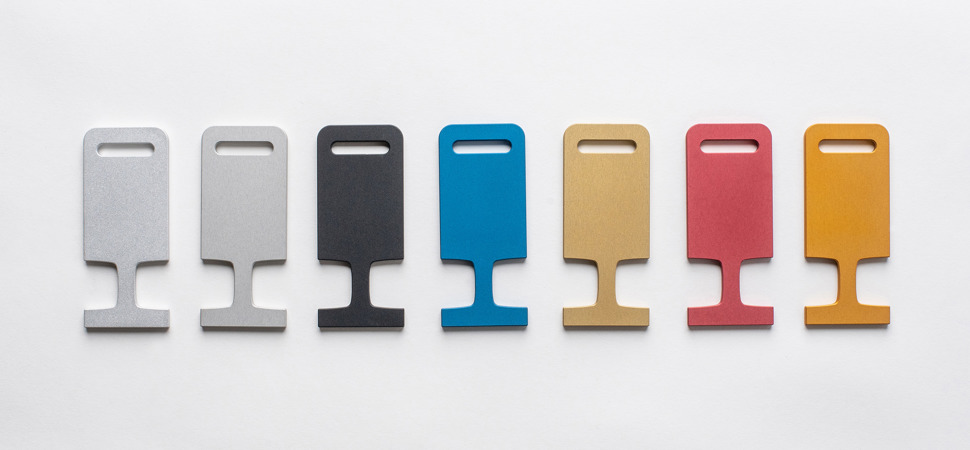
- Decorative colours and metallic finish.
- Electrically insulating (except unsealed anodising, which can absorb moisture and become conductive).
2. Types of Anodising Offered by Konlida
For machined and sheet metal parts, Konlida provides the following anodising services, all RoHS compliant (see section 5 for details).
| Type | Description | Coating Thickness (µm) | Applications |
|---|---|---|---|
| Type II – Class 1 (Clear) | Sulfuric acid anodising, unsealed or sealed | 5–18 | Cosmetic parts, indoor/outdoor corrosion protection |
| Type II – Class 2 (Black) | Same as Type II with black dye | 5–18 | Similar; dark aesthetic, UV stable |
| Type III – Hardcoat (Black) | Hard anodising (sulfuric acid, low temperature, high current density) | 25–150 | High‑wear applications (pistons, hydraulic cylinders, military equipment) |
Notes:
- Hard anodised parts have a black/grey colour (dyeing is possible but limited due to porosity).
- For thin (<0.5 mm) walls, hard anodising may cause dimensional changes (growth up to 50% of coating thickness).
- Our processes comply with MIL‑A‑8625 Type II / III and ISO 7599 standards.
For design guidelines on anodising, see our Surface Finish Guide.
3. What is Chromate Plating (Conversion Coating)?
Chromate plating is a chemical conversion coating, not an electrolytic process. The metal part is immersed in a solution containing hexavalent chromium (Cr⁶⁺) or trivalent chromium (Cr³⁺) compounds. The reaction converts the metal surface into a thin (0.5–2 µm) amorphous layer of chromium oxide and metal chromates.
Unlike anodising, no metal is added; the existing surface is transformed. Chromate coatings are electrically conductive (important for grounding) and provide excellent corrosion protection, especially for aluminium, titanium, magnesium, and zinc‑plated steel.
Key benefits:
- High corrosion resistance (salt spray up to 168 hours for Type II RoHS clear).
- Maintains electrical conductivity (unlike anodising).
- Excellent paint adhesion base.
- Low thickness – minimal dimensional change.
4. Types of Chromate Plating Offered by Konlida
| Type | RoHS Compliant | Colour | Characteristics | Typical Use |
|---|---|---|---|---|
| Type I – Class 1A | No (contains hexavalent Cr) | Yellow (iridescent) | Maximum corrosion protection for painted or unpainted parts | Aerospace, military, outdoor harsh environments |
| Type I – Class 3 | No | Yellow | Similar protection but with low electrical resistance | Electrical/electronic enclosures |
| Type II – RoHS (Clear) | Yes (trivalent Cr) | Clear/colourless | Good corrosion resistance, conductive | Consumer electronics, automotive interior parts |
Important:
- Type I (yellow) is non‑RoHS due to hexavalent chromium (Cr⁶⁺). It offers superior salt spray resistance (up to 336 hours) but is restricted in the EU under REACH and ELV directives. Use only for legacy or exempt applications.
- Type II (RoHS) uses trivalent chromium (Cr³⁺) and is environmentally compliant.
For regulatory guidance, consult our Environmental Compliance page.
5. RoHS Compliance and Environmental Notes
All anodising services from Konlida are RoHS compliant (Restriction of Hazardous Substances). This means the materials used contain very low levels (below permitted thresholds) of:
- Mercury (Hg)
- Lead (Pb)
- Cadmium (Cd)
- Hexavalent chromium (Cr⁶⁺) – except for Type I chromate plating
- Polybrominated biphenyls (PBBs)
- Polybrominated diphenyl ethers (PBDEs)
For chromate plating, only Type II (clear) is RoHS compliant. Type I (yellow) contains hexavalent chromium and should only be used where explicitly required and approved for EU markets.
6. Corrosion Performance Comparison (Salt Spray Testing)
| Finish | Material | Salt Spray Resistance (ASTM B117, 5% NaCl, 35°C) |
|---|---|---|
| Type II anodising (sealed) | Aluminium | 250–500 hours |
| Type III hard anodising (sealed) | Aluminium | 500–1,000 hours |
| Type I chromate (yellow) | Aluminium | 168–336 hours |
| Type II chromate (clear, RoHS) | Aluminium | 48–168 hours |
| Uncoated aluminium | Aluminium | < 24 hours (pitting) |
Note: Actual performance depends on alloy, pre‑treatment, and sealing quality. For marine or extreme industrial environments, we recommend Type II anodising with sealing or Type I chromate (where permitted).
7. Application Recommendations
| Application | Recommended Finish | Reason |
|---|---|---|
| Outdoor enclosures (medical, telecom) | Type II anodising, Class 1 or 2 | Good corrosion, UV stable, decorative |
| High‑wear mechanical parts (pumps, valves) | Type III hard anodising | Wear resistance, durability |
| Electronic housings needing grounding | Type II chromate (clear, RoHS) | Conductive, thin, corrosion resistant |
| Aerospace components (high performance) | Type I chromate (yellow) (if exempt) | Maximum salt and humidity protection |
| Consumer products (colour‑coded parts) | Type II anodising + dye | Wide colour range, attractive finish |
For parts requiring both corrosion protection and painting, chromate is often used as a primer.
8. Design Considerations for Finishing
- Dimensional growth: Anodising adds ~50% of coating thickness to each surface. For a 25 µm hardcoat, expect up to +12.5 µm per side – adjust tolerances accordingly.
- Edge effect: Sharp corners receive thinner anodising; radius edges >0.4 mm for uniform coating.
- Masking: Threads, precision bores, and electrical contact points can be masked to prevent insulation.
- Chromate for conductivity: Type II chromate (clear) has low contact resistance (typical <1 mΩ/cm²); suitable for EMI/RFI grounding.
Refer to our DFM for Finishing guide.
9. Why Choose Konlida for Anodising and Plating?
- In‑house finishing capabilities for rapid turnaround.
- RoHS compliant processes for EU‑bound products.
- Quality control: thickness measurement (eddy current), salt spray testing, adhesion testing.
- Support for customer‑specified colours (custom dye matching).
For technical questions or to discuss your finishing requirements, contact our application engineering team.