

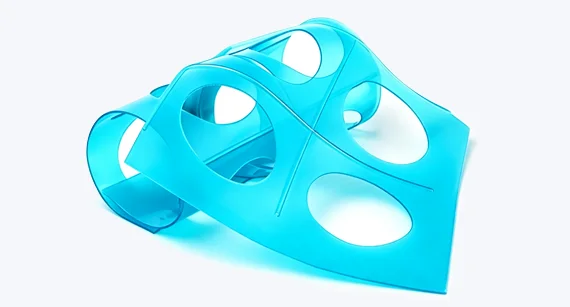

So, you are designing a part that requires flexibility and you need to choose a material. You might first spring to your familiar list of thermoplastic elastomers, but do not forget about thermoplastic polyurethane materials , commonly known as TPU . Depending on your application’s requirements, TPU might be your best option.
At Konlida, our injection moulding services support a wide range of elastomeric materials, including TPU for demanding applications. For parts that require both flexibility and durability, TPU offers a compelling combination of properties.
What is TPU?
TPU is an elastic thermoplastic material with high abrasion and chemical resistance. Like most elastomers, it is commonly used for seals, gaskets, and hoses. It can also be found on overmoulded plastic parts due to its ability to add grip or dampen vibration. It is similar to TPE, but offers more durability for parts that will experience wear and tear.
For a broader comparison of flexible material options, see our guide to elastomers and flexible materials .
TPU Advantages
The chemical and abrasion resistance of TPU material makes it suitable for applications in rugged environments. For example, gaskets in under‑the‑hood automotive applications or industrial machinery are often made from TPU since it holds up well when it comes in contact with oil and fuel. The material’s high impact resistance has also made it a popular option for protective smartphone cases and other electronics housings.
For applications requiring high abrasion resistance and durability, TPU is often preferred over standard TPEs. To understand how material properties like abrasion resistance compare across different polymer families, see our materials comparison guide .
Choosing the Right TPU
Chemical composition of the TPU material will vary based on whether it is a polyester‑based or polyether‑based TPU. A polyether‑based TPU is generally used when high hydrolysis and microbial resistance is critical or when fluctuating temperatures are present, especially at low temperatures. With many trade names and options on the market, it is important to read through the material data sheets when choosing TPU—or better yet, contact a resin supplier and discuss your application with an expert. The chart below can get you pointed in the right direction.
| Material Property | Polyester‑Based TPU | Polyether‑Based TPU |
|---|---|---|
| Abrasion resistance | Excellent | OK |
| Mechanical properties | Excellent | Good |
| Low temperature flexibility | OK | Excellent |
| Chemical resistance | Excellent | Poor |
| Hydrolysis resistance | Very Poor | Excellent |
| Microbial resistance | Very Poor | Good |
For a deeper understanding of how polymer structure affects material properties like hydrolysis resistance and low‑temperature flexibility, see our glass transition temperature of polymers guide.
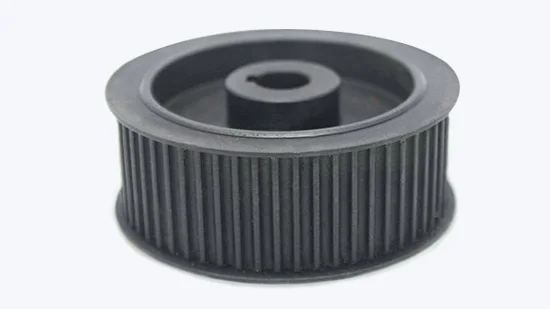
TPU vs. TPE: Understanding the Difference
While both TPU and TPE are flexible materials, they have distinct differences that affect their suitability for different applications:
| Property | TPU | TPE |
|---|---|---|
| Abrasion resistance | Excellent | Good |
| Chemical resistance | Excellent (especially polyester‑based) | Moderate |
| Durability | Higher (more wear‑resistant) | Lower |
| Flexibility | Good | Excellent |
| Cost | Higher | Lower |
| Typical applications | Gaskets, seals, protective cases, industrial parts | Soft‑touch grips, consumer goods |
TPU is generally the better choice when parts will be exposed to harsh chemicals, oils, fuels, or abrasive conditions. TPE is often preferred for consumer applications where cost and softer feel are more important than long‑term durability.
For applications requiring optical clarity alongside flexibility—such as light guides or transparent seals—our optical liquid silicone rubber guide covers another class of materials with unique optical properties.
TPU and Other Flexible Material Options
Primarily, TPU materials are moulded, which offers you a range of material and quantity options. If you are prototyping a TPU design, 3D printing can be a valuable low‑volume solution. Selective laser sintering (SLS) now offers TPU‑70A, a powder‑based TPU with an elongation up to 350% , good chemical resistance, flexibility, smooth surface finish, and high detail resolution.
If you are considering TPU for parts that will be produced in higher volumes, our production injection moulding capabilities can support quantities from 25 to 10,000+ parts in a range of engineering‑grade thermoplastics and elastomers.
For a comparison of additive and subtractive manufacturing approaches for elastomeric parts, see our rapid prototyping guide .
Summary
| Consideration | TPU Advantage |
|---|---|
| Abrasion resistance | Excellent – ideal for wear‑prone applications |
| Chemical resistance | Excellent (polyester‑based) – resists oils and fuels |
| Low‑temperature flexibility | Excellent (polyether‑based) – performs well in cold environments |
| Hydrolysis resistance | Excellent (polyether‑based) – resists moisture and microbial attack |
| Overmoulding | Excellent – adds grip and vibration damping to rigid substrates |
| 3D printing | Available via SLS – good for prototypes and low‑volume production |
Need Help Selecting a Flexible Material?
Our applications engineering team can help you determine whether TPU, TPE, or another elastomeric material is the right choice for your specific application requirements—including operating temperature, chemical exposure, and wear conditions.