

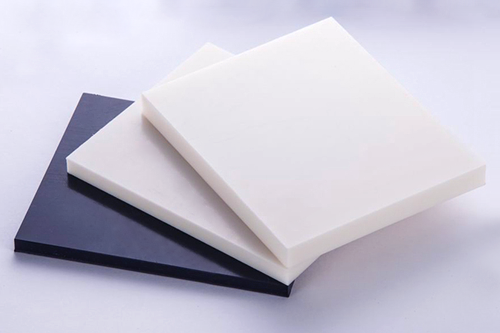

Delrin Material Properties: A Strong, Versatile Plastic Alternative to Metal
When you work with us at Konlida Precision Technology, you can choose from hundreds of manufacturing materials, including various grades of thermoplastics, metals, and elastomers. Although you have the option of supplying your own material for injection moulding projects, most of our customers prefer the wide variety we carry.
When selecting a material, consider its properties, manufacturability characteristics, cosmetic appearance, and cost.
For a full overview of available materials, see our [Internal Link: Materials Resource Center → /materials/] (green – strong).
What is Delrin?
One of the most popular plastic material choices we offer for injection moulding [Internal Link: /services/injection-molding/] (green) and CNC machining [Internal Link: /services/cnc-machining/] (green) is Delrin acetal homopolymer (POM – Polyoxymethylene).
Delrin plastic works as an excellent replacement for metal because of its:
- High tensile strength
- Low friction and high wear resistance
- Creep and warp resistance
- Overall durability and toughness
Additional Delrin material properties include:
- High density
- Low moisture absorption
- Chemical resistance to hydrocarbons, solvents, and neutral chemicals
Delrin Plastic is Ideal for Industrial Applications
These properties make Delrin ideal for a range of industrial and mechanical applications. Parts exposed to moist or wet environments – such as pump and valve components – are especially appropriate. Other common uses include gears, bearings, bushings, rollers, fittings, and electrical insulator parts.
For general reference, here are typical values for Delrin (converted to metric units):
| Property | Delrin Typical Value |
|---|---|
| Tensile Strength | 41 – 152 MPa |
| Impact Strength (notched) | 40 – 107 J/m |
| Heat Deflection Temperature (at 1.82 MPa) | 82 – 149 °C |
| Elongation at Break | 10 – 40% |
Note: Values are approximate and grade‑dependent. For detailed data sheets, visit our [Internal Link: Material Properties Database → /materials/properties/] (green – strong).
Much more detailed data is available on our website. A typical data sheet for Delrin 150 lists the following advantages:
- Good dimensional stability
- Excellent machinability
- Superior impact and creep resistance
- High fatigue endurance
- High strength and stiffness properties
- Chemical resistance to fuels and solvents
- Low moisture absorption – Delrin can operate in wet environments with little effect on performance or dimensions
- Good wear and abrasion properties – with its low coefficient of friction and hard, resilient surface, Delrin is the material of choice in many wear applications
- Natural grade is FDA, NSF, and USDA compliant
Data sheets also include charts listing Delrin’s physical, mechanical, thermal, and electrical properties – all important considerations.
For a side‑by‑side comparison of Delrin with other engineering plastics, see our [Internal Link: Material Comparison Guide → /resources/material-comparison-guide/] (yellow – optional).
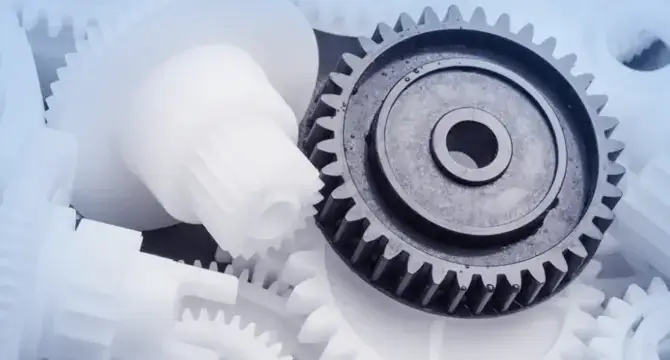
Real‑World Applications
We have helped customers use Delrin successfully in a variety of products, including:
- Surgical tool prototypes – a medical device manufacturer used Delrin for proof‑of‑concept prototypes of a handheld surgical instrument, benefiting from its machinability and dimensional stability.
- High‑precision consumer products – a manufacturer of musical accessories chose Delrin for its wear resistance and consistent mechanical properties.
These examples illustrate how Delrin can replace metal while reducing weight and machining costs.
For more case studies, visit our [Internal Link: Case Studies → /case-studies/] (yellow – optional).
Why Choose Delrin Over Metal?
| Consideration | Delrin (POM) | Metal (e.g. Aluminium or Brass) |
|---|---|---|
| Weight | Lightweight | Heavier |
| Machinability | Excellent – fast cutting, low tool wear | Good but slower, higher tool wear |
| Corrosion resistance | Excellent (no rust) | May require coating or anodising |
| Electrical insulation | Yes | No (conductive) |
| Cost (raw material) | Lower | Higher |
| Operating temperature | Up to ~120°C | Higher (depends on alloy) |
Delrin is particularly advantageous for applications requiring low friction, good wear resistance, and electrical insulation – all without the weight or corrosion concerns of metal.
For design guidance on converting metal parts to plastic, see our [Internal Link: Metal‑to‑Plastic Conversion Guide → /resources/metal-to-plastic/] (yellow – optional).
Our Expert Team is Ready to Help
We are ready to work with you and discuss materials, including Delrin injection moulding, its mechanical and thermal properties, and how its density and performance characteristics make it a terrific substitute for metal.
Get a quote to start your injection moulding project.
[Internal Link: Upload CAD for Quote → /quote/] (green – strong)
For more material guidance, we also offer free CNC machining and injection moulding design aids – pocket‑sized, quick‑reference guides to help you identify the right materials for your next project. These selectors list specific properties to ensure you choose the most suitable material and process for your part’s application.