
Stereolithography (SLA) Resin 3D Printing Service

Accelerate your path from concept to production with SLA. Iterate early with confidence, then transition seamlessly to production-quality parts

Stereolithography sla resin 3d printing service

Certifications ISO 9001:2015 | ISO 13485:2016 | AS9100D | IATF 16949

What is Stereolithgraphy?

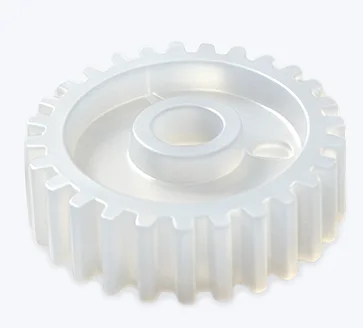
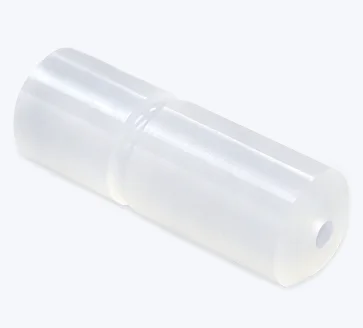
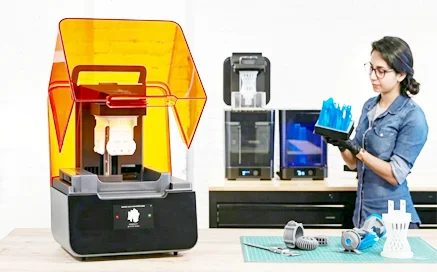
Stereolithography (SLA) is a 3D printing process used to create concept models, cosmetic prototypes, and complex parts with intricate geometries. It's an additive manufacturing technology that forms parts by curing thermoset resin with a UV laser. A wide selection of materials, extremely high feature resolutions, and quality surface finishes are possible with SLA.

SLA 3D printing is primarily used for:

  • parts requiring high accuracy and features as small as 0.002 in.
  • good surface quality for cosmetic prototypes
  • form and fit testing

When to Use SLA Throughout Product Development

Use SLA across every stage of development by starting with cost-effective materials for early iteration, then progressing to production-ready resins as your design is finalized.

Early Stage: Concept & Iteration

Use cost-effective, ABS-Like Value resin to quickly explore and refine designs:

  • Lower-cost resin enables design iterations
  • Fast builds support rapid concept validation
  • Ideal for early-stage form and geometry exploration

Validation Stage: Form, Fit, & Function

Transition to higher-resolution SLA builds and improved finishes as your design stabilizes: 

  • Validate form, fit, and functional requirements 
  • Improve surface quality for realistic prototypes
  • Prepare designs for downstream processes

Production Stage: End-use Parts

Move to advanced SLA materials and finishing options once your design is finalized:

  • Use performance-oriented resins suited for end-use
  • Achieve consistent, repeatable part quality
  • Apply finishing processes for production-level appearance and performance

How Engineers Use SLA Across the Product Lifecycle

Engineers rely on SLA throughout product development for its ability to deliver precise, repeatable parts, from early concept models to production-ready components.

Precision for Complex Geometry

Produce fine features and intricate details early in the design process while accurately capturing design intent without simplifying geometry and maintaining dimensional accuracy across iterations.

Surface Quality for Realistic Validation

Achieve smooth surfaces for cosmetic and functional prototypes, reduce post-processing in early and mid stages, and enable more accurate evaluation of fit, finish, and appearance.

Material Range that Scales

Start with cost-effective, general-purpose resins for early iteration, transition to engineering-grade materials for validation, and move to performance-oriented resins for end-use applications.

Repeatability from Prototype to Production

Ensure consistent part quality across builds, support reliable testing and validation cycles, and scale to low-volume production without changing processes.

Stereolithography (SLA) Design Guidelines and Capabilities

Our basic guidelines for stereolithography include important design considerations to help improve part manufacturability, enhance cosmetic appearance, and reduce overall production time.

US

Metric

Normal Resolution29 in. x 25 in. x 21 in. *736mm x 635mm x 533mm
High Resolution10 in. x 10 in. x 10 in.254mm x 254mm x 254mm
Micro Resolution5 in. x 5 in. x 2.5 in.127mm x 127mm x 63.5mm

There are three different resolutions available for SLA 3D printing.

US

Metric

Normal Resolution0.004 in.0.1016mm
High Resolution0.002 in.0.0508mm
Micro Resolution0.001 in.0.0254mm

US

Metric

Normal ResolutionX-Y: 0.010 in.
Z: 0.016 in.
X-Y: 0.254mm
Z: 0.406mm
High ResolutionX-Y: 0.005 in.
Z: 0.016 in.
X-Y: 0.1016mm
Z: 0.406mm
Micro ResolutionX-Y: 0.0025 in.
Z: 0.008 in.
X-Y: 0.0635mm
Z: 0.203mm

US

Metric

Normal Resolution0.010 in.0.254mm
High Resolution0.004 in.0.1016mm
Micro Resolution0.0025 in..0635mm

US

Metric

Normal Resolution0.025 in.0.635mm
High Resolution0.020 in.0.508mm
Micro Resolution0.015 in0.381mm
Stereolithography (SLA) 3D Printing Tolerances

For well-designed parts, tolerances in the X/Y dimension of ±0.002 in. (0.05mm) for first inch plus 0.1% of nominal length. (0.001mm/mm), and Z dimension tolerances of ±0.005 in. for first inch plus 0.1% of nominal length, can typically be achieved. Note that tolerances may change depending on part geometry.

*Available for the following materials: ABS-Like White and Gray, and ABS-Like Translucent/Clear.

Add Your Heading Text Here

Add your heading text here
ABS-Like White (Accura Xtreme White 200)
ABS-Like Gray (Accura Xtreme Gray)
ABS-Like Black (Accura 7820)
ABS-Like Translucent/Clear (WaterShed XC 11122)
MicroFine™ (Gray and Green)
ABS-Like Value
PP-Like Translucent White (Somos 9120)
PC-Like Advanced High Temp (Accura 5530)
PC-Like Translucent/Clear (Accura 60)
Ceramic-Like Advanced HighTemp (PerFORM)
True Silicone

Compare SLA Material Properties

Material Color Tensile StrengthTensile ModulusElongation
ABS-Like White
(Accura Xtreme White 200)
White7.9 ksi479 ksi9%
ABS-Like Gray
(Accura Xtreme Gray)
Gray5.8 ksi290 ksi9%
ABS-Like Black
(Accura 7820)
Black7.0 ksi435 ksi5%
ABS-Like Translucent/Clear (WaterShed XC 11122)Translucent/Clear7.9 ksi421 ksi6%
MicroFine™
(Gray and Green)
Gray or Green8.7 ksi377 ksi8%
ABS-Like Value (N3D-MODEL333)Blue8.7 ksi310 ksi10%
PP-Like Translucent White (Somos 9120)Translucent/White5.0 ksi232 ksi25%
PC-Like Translucent/Clear (Accura 60)Translucent/Clear10.8 ksi508 ksi7%
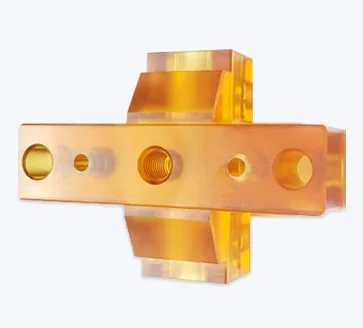
PC-Like Advanced High Temp* (Accura 5530) Translucent/Amber6.5 ksi566 ksi1.5%
Ceramic-Like Advanced HighTemp*
(PerFORM)
White10.9 ksi1,523 ksi1%
True Silicone Translucent White0.711 ksin/a>1,000%

*Properties listed are based on thermal cure

Material Color Tensile StrengthTensile ModulusElongation
ABS-Like White
(Accura Xtreme White 200)
White54.47 Mpa3300 Mpa9%
ABS-Like Gray
(Accura Xtreme Gray)
Gray39.98 Mpa2000 Mpa9%
ABS-Like Black
(RenShape SL7820)
Black48.26 Mpa3000 Mpa5%
ABS-Like Translucent/Clear (WaterShed XC 11122)Translucent/Clear54.47 Mpa2600 Mpa6%
MicroFine™
(Gray and Green)
Gray or Green59.98 Mpa2600 Mpa8%
ABS-Like Value (N3D-MODEL333)Blue60 MPa2150 MPa10%
PP-Like Translucent White (Somos 9120)Translucent/White34.47 Mpa1600 Mpa25%
PC-Like Translucent/Clear (Accura 60)Translucent/Clear74.46 Mpa3503 Mpa7%
PC-Like Advanced High Temp* (Accura 5530) Translucent/Amber44.81 Mpa3902 Mpa1.5%
Ceramic-Like Advanced HighTemp*
(PerFORM)
White75.15 Mpa10,500 Mpa1%
True Silicone Translucent White4.9 Mpan/a>1,000%

*Properties listed are based on thermal cure

These figures are approximate and dependent on a number of factors, including but not limited to, machine and process parameters. The information provided is therefore not binding and not deemed to be certified. When performance is critical, also consider independent lab testing of additive materials or final parts.

Add Your Heading Text Here

  
UnfinishedDots, or standing “nibs,” remain evident on the bottom of the part from the support structure remnants. Good for when fast lead times are required or cost is a factor
NaturalSupported surfaces are sanded down to eliminate the support nibs.
StandardSupported surfaces are sanded, and the entire part is finely blasted for a consistent look. Note that the layers are still present.
CustomSoft-touch paint, clear part finishing, painting, masking, color matching, decals/graphic, and texture finishes are available.
Unfinished

Material: ABS-like Translucent/Clear Finish: Unfinished

Standard

Material: ABS-like Translucent/Clear
Finish: Standard

Natural

Material: ABS-like Translucent/Clear
Finish: Natural

Custom

Material: ABS-like Translucent/Clear
Finish: Custom

Finish unfinished

Material: MicroFine Gray™
Finish: Unfinished

Finish standard

Material: MicroFine Gray™ 
Finish: Standard

Finish natural

Material: MicroFine Gray™ 
Finish: Natural

Finish custom

Material: MicroFine Gray™ 
Finish: Custom

Additional finishing options for stereolithography

Additional Finishing Options for Stereolithography

Custom finishing is a mix of science, technology, and fine art that can transform a part to your exact specifications. Finishes include:

  • Soft-touch paint
  • Clear part finishing
  • Paint finishes
  • Decals/graphic
  • Texture
  • Masking
Metal plating

Metal Plating

Our metal-plating process for SLA coats a ceramic-filled PC-like material (Somos PerFORM) with a nickel that gives parts the look, feel, and strength of metal, but without the weight. The combination of the material’s strength, rigidity, and temperature resistance with nickel plating, takes strength, stiffness, and impact and temperature resistance to a degree previously unattainable in SLA parts.

Microfluidics

Microfluidics

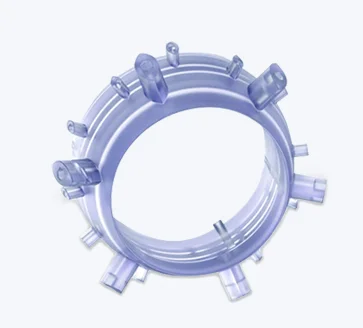
Our microfluidic fabrication process is a modified form of high-resolution SLA that uses a clear ABS-like material (WaterShed XC 11122). Parts are resistance to water and humidity, and work well for lens and flow-visualization models.

Our SLA 3D Printers

Our stereolithography machines consists of Vipers, ProJets, and iPros. In high-resolution mode, Vipers and ProJets can make parts with extremely tiny features and crisp details, while in normal-resolution mode, they can build cost-effective parts very quickly.

iPros have extremely large build volumes at 29 in. by 25 in. by 21 in. (736mm by 635mm by 533mm), yet are still able to image highly detailed parts easily.

Our sla 3d printers
How does sla 3d printing work

How Does SLA 3D Printing Work?

The SLA machine begins drawing the layers of the support structures, followed by the part itself, with an ultraviolet laser aimed onto the surface of a liquid thermoset resin. After a layer is imaged on the resin surface, the build platform shifts down and a recoating bar moves across the platform to apply the next layer of resin. The process is repeated layer by layer until the build is complete.

Newly built parts are taken out of machine and into a lab where solvents are used to remove any additional resins. When the parts are completely clean, the support structures are manually removed. From there, parts undergo a UV-curing cycle to fully solidify the outer surface of the part. The final step in the SLA process is the application of any custom or customer-specified finishing. Parts built in SLA should be used with minimal UV and humidity exposure so they don’t degrade.

Additional Resources About Stereolithography (SLA)