
CNC Milling Service
Get custom milled parts for rapid prototyping and production.
Certifications ISO 9001:2015 | AS9100D | ITAR
Innovative Companies We Support





Industries We Serve
CNC Milling
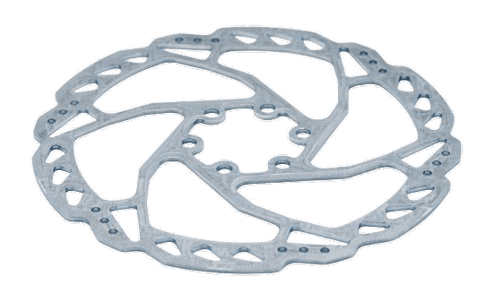
CNC milling is a subtractive manufacturing process that uses 3-axis milling and 5-axis indexed milling processes to cut solid plastic and metal blocks into final parts.
CNC Milling
CNC milling is a subtractive manufacturing process that uses 3-axis milling and 5-axis indexed milling processes to cut solid plastic and metal blocks into final parts.
CNC Milling
CNC milling is a subtractive manufacturing process that uses 3-axis milling and 5-axis indexed milling processes to cut solid plastic and metal blocks into final parts.
CNC Machining Services for End-Use Parts
Get high‑quality machined parts faster with our expanded automated CNC milling—parts ready in as fast as 4 days
CNC Machining Materials
Metals
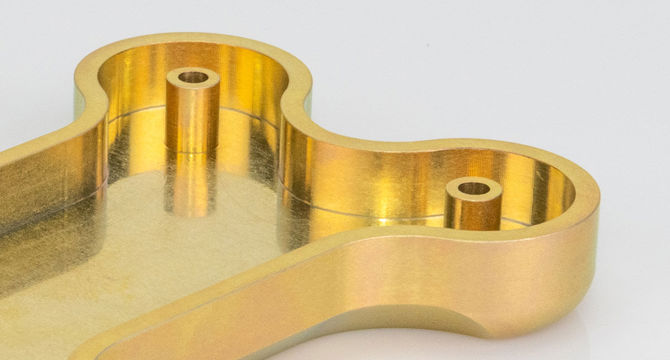
Brass
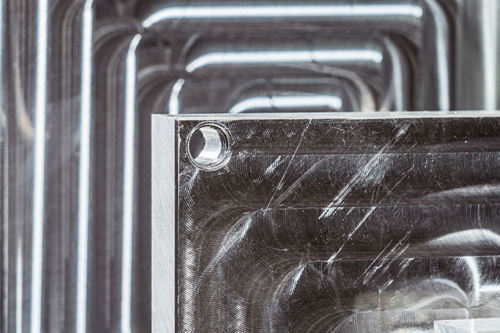
Aluminum is a popular choice for machining due to its low density, good mechanical properties, high thermal and electrical conductivity, and resistance to corrosion. Aluminum alloys, such as 6061-T651, 7075-T651, and 2024-T351, are commonly used in CNC machining because they offer a good balance of strength, machinability, and cost.
Aluminum
Aluminum is a popular choice for machining due to its low density, good mechanical properties, high thermal and electrical conductivity, and resistance to corrosion. Aluminum alloys, such as 6061-T651, 7075-T651, and 2024-T351, are commonly used in CNC machining because they offer a good balance of strength, machinability, and cost.
Aluminum
Aluminum is a popular choice for machining due to its low density, good mechanical properties, high thermal and electrical conductivity, and resistance to corrosion. Aluminum alloys, such as 6061-T651, 7075-T651, and 2024-T351, are commonly used in CNC machining because they offer a good balance of strength, machinability, and cost.
Aluminum
Aluminum is a popular choice for machining due to its low density, good mechanical properties, high thermal and electrical conductivity, and resistance to corrosion. Aluminum alloys, such as 6061-T651, 7075-T651, and 2024-T351, are commonly used in CNC machining because they offer a good balance of strength, machinability, and cost.
Aluminum
Aluminum is a popular choice for machining due to its low density, good mechanical properties, high thermal and electrical conductivity, and resistance to corrosion. Aluminum alloys, such as 6061-T651, 7075-T651, and 2024-T351, are commonly used in CNC machining because they offer a good balance of strength, machinability, and cost.
Aluminum
Aluminum is a popular choice for machining due to its low density, good mechanical properties, high thermal and electrical conductivity, and resistance to corrosion. Aluminum alloys, such as 6061-T651, 7075-T651, and 2024-T351, are commonly used in CNC machining because they offer a good balance of strength, machinability, and cost.
Aluminum
Aluminum is a popular choice for machining due to its low density, good mechanical properties, high thermal and electrical conductivity, and resistance to corrosion. Aluminum alloys, such as 6061-T651, 7075-T651, and 2024-T351, are commonly used in CNC machining because they offer a good balance of strength, machinability, and cost.
Plastics
ABS
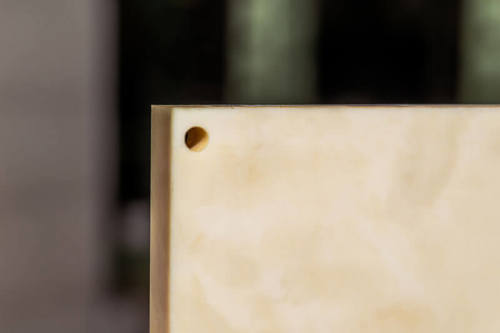
ABS is a low-cost engineering plastic that is easy to machine. ABS is an ideal material for structural applications when impact resistance, strength, and stiffness are required. It’s widely used for pre-production prototypes since it has excellent dimensional stability and is easy to paint and glue.
Aluminum
Aluminum is a popular choice for machining due to its low density, good mechanical properties, high thermal and electrical conductivity, and resistance to corrosion. Aluminum alloys, such as 6061-T651, 7075-T651, and 2024-T351, are commonly used in CNC machining because they offer a good balance of strength, machinability, and cost.
Aluminum
Aluminum is a popular choice for machining due to its low density, good mechanical properties, high thermal and electrical conductivity, and resistance to corrosion. Aluminum alloys, such as 6061-T651, 7075-T651, and 2024-T351, are commonly used in CNC machining because they offer a good balance of strength, machinability, and cost.
Aluminum
Aluminum is a popular choice for machining due to its low density, good mechanical properties, high thermal and electrical conductivity, and resistance to corrosion. Aluminum alloys, such as 6061-T651, 7075-T651, and 2024-T351, are commonly used in CNC machining because they offer a good balance of strength, machinability, and cost.
Aluminum
Aluminum is a popular choice for machining due to its low density, good mechanical properties, high thermal and electrical conductivity, and resistance to corrosion. Aluminum alloys, such as 6061-T651, 7075-T651, and 2024-T351, are commonly used in CNC machining because they offer a good balance of strength, machinability, and cost.
Aluminum
Aluminum is a popular choice for machining due to its low density, good mechanical properties, high thermal and electrical conductivity, and resistance to corrosion. Aluminum alloys, such as 6061-T651, 7075-T651, and 2024-T351, are commonly used in CNC machining because they offer a good balance of strength, machinability, and cost.
Aluminum
Aluminum is a popular choice for machining due to its low density, good mechanical properties, high thermal and electrical conductivity, and resistance to corrosion. Aluminum alloys, such as 6061-T651, 7075-T651, and 2024-T351, are commonly used in CNC machining because they offer a good balance of strength, machinability, and cost.
Factory vs. Network
We offer a range of capabilities through our in-house digital factories at Protolabs along with our digital network of manufacturers. If speed is essential, our factory capabilities have you covered, but if you're in need of advanced capabilities and have more flexibility in your schedule, try Protolabs Network.
Factory Capabilities for CNC Milling | Network Capabilities for CNC Milling | ||
| Maximum Part Size | 22 in. x 14 in. x 3.75 in. (559mm x 356mm x 95.3mm) | 25.5 in. x 25.5 in. x 11.8 in. (650mm x 650mm x 300mm) | |
| Minimum Part Size | 0.25 in. x 0.25 in x .0.04 in.(6.35mm x 6.35mm x 1.016mm) | 0.0393 in. x 0.0393 in. x 0.0393 in.(1mm x 1mm x 1mm) | |
| Tolerances for Parts without Technical Drawing | +/- 0.005 in. (+/- 0.127mm) | ISO 2768-1-1989-f (metals), ISO 2768-1-1989-m (plastics) | |
| Tolerances for Parts with Technical Drawing | Linear tolerance quoted to ISO 2768-1-1989-f, Standard hole tolerance quoted to +/- 0.005 in. (+/- 0.127mm) Hole & bore-style tolerance on specified feature may be +/- 0.0005 in. (+/- 0.0127mm) | Please clearly indicate tolerances for nominal sizes below 0.5mm on your technical drawing. | |
| Radii | Sharp inside corners on a part will be radiused (rounded) as a natural result of the CNC machining process. | ||
| Text | Plastic and soft metals: Minimum width of 0.018 in. (0.457mm), depth of 0.0118 in. (0.3mm). Example text size would be 16 point Arial Rounded MT font. Hard metals: Minimum width of 0.033 in. (0.838mm) and depth of 0.0118 in. (0.3mm). Example text size would be 22 point Arial Rounded MT font. | ||
Note: Maximum part size varies by material. View this table to see a complete listing of our maximum part sizes.
Factory Capabilities for CNC Turning | Network Capabilities for CNC Turning | ||
| Maximum Dimensions | Diameter | 3.95 in. (100.33mm) | 17 in. (431mm) |
| Length | 9 in. (228.6mm) | 39 in. (990mm) | |
| Minimum Dimensions | Diameter | 0.16 in. (4.07mm) | 0.039 in. (1mm) |
| Length | 0.05 in. (1.27mm) | 0.019 in. (0.5mm) | |
| Wall Thickness | 0.020 in. (0.51mm) | 0.019 in. (0.5mm) | |
| Angle | 30° | Below 90° | |
| Tolerances | +/- 0.005 in. (+/- 0.13mm) | ±0.001 in. (0.020mm) | |
Note: Small features may be allowed, but the diameter in any region should not be less than 0.030 in. (0.76mm). Sharp conical points are allowed; angles should be greater than 30 degrees. Walls thinner than 0.020 in. (0.5mm) typically do not survive the machining process.

Production PRO Tip
As production volumes increase, take advantage of Protolabs Network for lower unit costs.
Surface Finish and Post-Processing Options
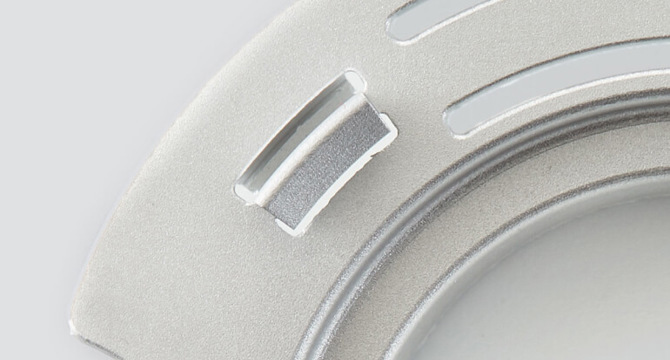
Protolabs offers a variety of CNC machining surface finishing options to meet your part requirements. More advanced coating and plating options are also available.
Surface Finish Options
- Edges broken with tool marks visible
- Edges broken with light bead blasting
- Sharp edges (tool marks visible)
Coating and Plating Options
- Anodizing
- Chromate coating
- Powder coating
- Zinc coating
- Nickle plating
Why Choose Us for Custom CNC Machining?
Fast and Reliable Delivery
Iterate part designs quickly and accelerate product development with quick-turn parts. Our automated design analysis will help spot any difficult to machine features before your design is sent to the manufacturing floor and save you from costly reworks further down the product development cycle.
Fast and Reliable Delivery
Iterate part designs quickly and accelerate product development with quick-turn parts. Our automated design analysis will help spot any difficult to machine features before your design is sent to the manufacturing floor and save you from costly reworks further down the product development cycle.
Fast and Reliable Delivery
Iterate part designs quickly and accelerate product development with quick-turn parts. Our automated design analysis will help spot any difficult to machine features before your design is sent to the manufacturing floor and save you from costly reworks further down the product development cycle.
Fast and Reliable Delivery
Iterate part designs quickly and accelerate product development with quick-turn parts. Our automated design analysis will help spot any difficult to machine features before your design is sent to the manufacturing floor and save you from costly reworks further down the product development cycle.
Fast and Reliable Delivery
Iterate part designs quickly and accelerate product development with quick-turn parts. Our automated design analysis will help spot any difficult to machine features before your design is sent to the manufacturing floor and save you from costly reworks further down the product development cycle.
Fast and Reliable Delivery
Iterate part designs quickly and accelerate product development with quick-turn parts. Our automated design analysis will help spot any difficult to machine features before your design is sent to the manufacturing floor and save you from costly reworks further down the product development cycle.
What is CNC Machining and How Does it Work?
CNC machining is an automated manufacturing process that transforms a solid block or rod of material into a part using end mills. The end mills are controlled by software (G-code) which references a 3D CAD model to reduce the stock material into a desired geometry. Parts can be manufactured relatively quickly due to the level of automation.
There are many types of CNC machines, which include CNC milling and CNC turning. CNC machining is a suitable manufacturing process for one-off prototypes or custom components as well as mid-volume production quantities.
Advantages of CNC Machining
The subtractive process of CNC machining provides multiple benefits for both prototyping and production parts.
- Precision and repeatability
- Tight tolerances
- Production-grade materials
- Quick-turn parts within 1 day
- Lower piece-part price at higher quantities
- Robust post-processing to improve cosmetics and material properties
Advantages of CNC Machining
The subtractive process of CNC machining provides multiple benefits for both prototyping and production parts.
- Precision and repeatability
- Tight tolerances
- Production-grade materials
- Quick-turn parts within 1 day
- Lower piece-part price at higher quantities
- Robust post-processing to improve cosmetics and material properties
CNC Machining Design Guide
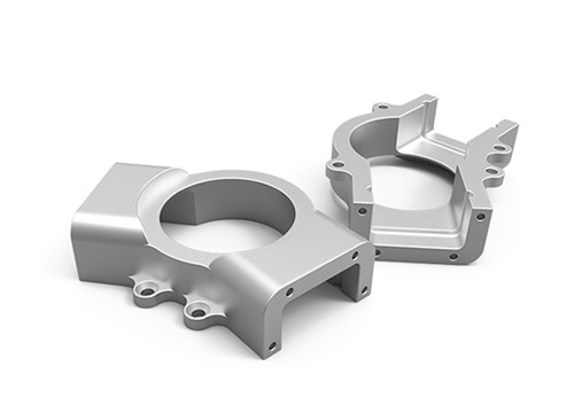
In this guide to CNC machining, you'll learn how to create efficient, manufacturable metal and plastic parts for prototyping and production.
Get an Instant CNC Machining Quote
Upload a 3D CAD file of your machined part and in seconds to hours, we'll send you manufacturing analysis and quote specific to your request. In the automated factory, within your quote you can modify materials and quantities, see pricing updates in real-time, and assign threading with a click of your mouse. In the semi-automated workflow that accepts technical drawings, you’ll receive a quote specific to the expanded needs you’ve uploaded.
Tour Our Automated CNC Machine Shop
Take a quick tour through our 215,000 sq. ft. CNC machining facility in Minnesota to see how we leverage digitally-enabled processes to achieve industry-best lead times.
CNC Machining FAQs
CNC machining is a very effective solution for limited runs and lower quantity parts. Price depends on the material chosen, complexity, quantity, and required lead time. Prices for geometry manufacturable by CNC versus 3D printing are relatively comparable, but typically machining offers improved material properties and surfaces. The best way to find your exact price is to submit a 3D CAD model and get an interactive quote with design for manufacturability (DFM) feedback. The automated and semi-automated manufacturing sites are best suited for high mix, lower quantity solutions. Pricing for higher volume part quantities are best quoted through our Protolabs Network.
At all our fulfillment locations, we offer UNF, UNC, and metric threads. Our automated factory can machine parts for coil and key inserts without supplying or installing them. In our semi-automated factory and Protolabs Network, we provide the same threading options, plus SM1, SM2, and SM3 lens threads. We can also install hardware like standard coil inserts, key inserts, and heli-coils at these locations. View this page to see our complete threading options.
Maximum part size will vary based on your selected material. Our largest part size offered is 22 in. x 14 in. x 3.75 in. (559mm x 356mm x 95.25mm) and is available in Aluminum 6061 and 7075. View this table to see maximum dimensions by material.
We have a variety of resources on CNC machining and how to design parts for the process. Here are some of our favorites:
Additional Links and Resources

Aerospace
High-quality components from early prototyping to hot-fire testing to launch
Aerospace
High-quality components from early prototyping to hot-fire testing to launch
Aerospace
High-quality components from early prototyping to hot-fire testing to launch
Get an online quote and manufacturing analysis today.