
CNC Milling Service
Get custom milled parts for rapid prototyping and production.
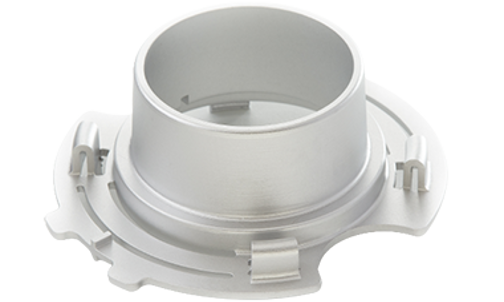
Certifications ISO 9001:2015 | AS9100D | ITAR
Innovative Companies We Support





Jump to Section
- Capabilities
- Materials
- Surface Finishes
- Tour Our Machine Shop
- About CNC Milling
Our factory CNC milling process produces custom prototypes and end-use production parts in as fast as 1 day. Our factories use 3-axis milling and 5-axis indexed milling processes to manufacture parts from more than 30 engineering-grade plastics and metals. Through our semi-automated factory, you can also order first article inspection (FAI) reporting, material certifications, and additional finishing options like anodizing, chromate plating, and powder coating. Additionally, our Protolabs Network is ideal for machined production parts, you can also get more competitive pricing at higher quantities in addition to inspections, coatings, and other certifications.
Our CNC milling service is commonly used for:
- functional prototypes
- jigs and fixtures
- production components in lower volumes
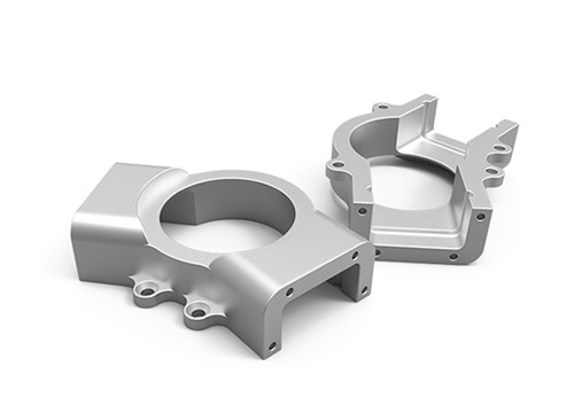
CNC Machining Design Guide
In this guide to CNC machining, you'll learn how to create efficient, manufacturable metal and plastic parts for prototyping and production.
Add Your Heading Text Here
Our basic guidelines for CNC turning include important design considerations to help improve part manufacturability, enhance cosmetic appearance, and reduce overall production time.
| US | Metric | ||
| Maximum Dimensions | Diameter | 3.95 in. | 100.33mm |
| Length | 9 in. | 228.6mm | |
| Minimum Dimensions | Diameter | 0.16 in. | 4.07mm |
| Length | 0.05 in. | 1.27mm | |
| Wall Thickness | 0.020 in. | 0.51mm | |
| Angle | 30° | 30° | |
| Tolerances | +/- 0.005 in. | +/- 0.13mm | |
Additional Notes on CNC Turning Guidelines
- Small features may be allowed, but the diameter in any region should not be less than 0.030 in. (0.76mm).
- Sharp conical points are allowed; angles should be greater than 30 degrees. Walls thinner than 0.020 in. (0.5mm) typically do not survive the machining process.
Materials for CNC Turning
We stock a range of metal materials that are suitable for various part applications and industries. Choose from aluminum, brass, low carbon steel, stainless steel, steel alloy, and titanium for turned parts.
- Aluminum
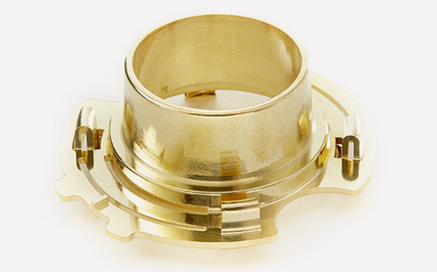
- Brass
- Low Carbon Steel
- Steel Alloy
- Stainless Steel
- Titanium
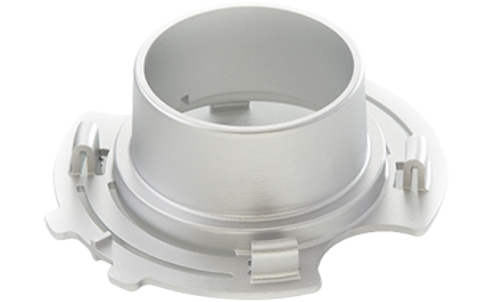
Surface Finish Options for Turned Parts
Parts that are turned typically have a very smooth surface finish. The as-machined surface finish of the cylindrical areas will typically be much smoother using the lathe than the mill, so consider this when selecting the machining method for those parts that qualify for either method. Areas cut with live tooling, such as flats and slots, may have visible tools marks.
If desired, the metal parts can be lightly bead blasted leaving a fine matte finish. Hard metals like steel and stainless steel can also have edges broken (deburred) with a light bead blast to remove metal slivers, and sharp or rough areas.
| Aluminum | Edges broken with visible toolmarks, edges broken with light bead blast, or sharp edges with visible toolmarks |
|---|---|
| All other metals | Edges broken with visible toolmarks or edges broken with light bead blast |
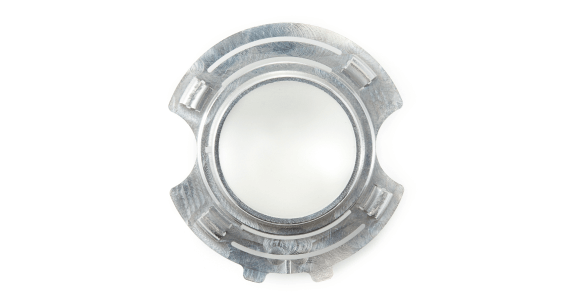
Material: Aluminum
Surface Finish: Broken Edge
Material: Aluminum
Surface Finish: Broken Edge
Material: Aluminum
Surface Finish: Broken Edge
Anodizing and Chromate Plating Specifications
| Anodize | Hard Anodize | Chromate |
|---|---|---|
MIL-A-8625 Type II, Class 2 (Blk) MIL-A-8625 Type II, Class 1(Clr) | MIL-A-8625 Type III, Class 2 (Blk) | MIL-DTL-5541 Type II, Class 3 (Clr) |
Quick-turn Finishing
Here are the requirements to get parts in as fast as 4 days (1-day expedite + 3 days for plating):
- Aluminum 6061/6082 and 7075 material eligibility
- Threaded holes plugged
- No masking available
High-requirement Finishing
Have AS9100 and ITAR requirements? Try our domestic precision machining option. If you have more complex anodizing and plating requirements, work with our digital network of manufacturers. The network works well for components that require a specialized color or material option such as titanium or nickel.
What is CNC Turning?
CNC turning is a subtractive manufacturing process that rotates a metal rod while a cutting tool is held against the stock to remove material and create final parts. Our CNC lathes are also equipped with live tooling that can machine flat features and holes into the workpiece. Outside diameter (OD) and inside diameter (ID) threading is also available.
Turned parts can then be left as-machined, with visible tool marks, or bead blasted. When the run is complete, parts are inspected, boxed and shipped shortly thereafter.
Resources
Plastic Manufacturing: Common Processes and Materials
Learn how to select the best manufacturing process and material for your custom plastic parts
Stainless Steel
This versatile, corrosion-resistant, and attractive metal is consistently a popular choice.
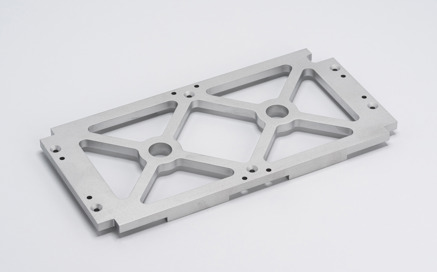
Aluminum
This metal is popular due to its high strength-to-weight ratio, excellent corrosion resistance, conductivity, and recyclability.
Aluminum
This metal is popular due to its high strength-to-weight ratio, excellent corrosion resistance, conductivity, and recyclability.


